OpenAI Just Chose Dublin. I Proposed There in 2013. The City Has Always Known Something.

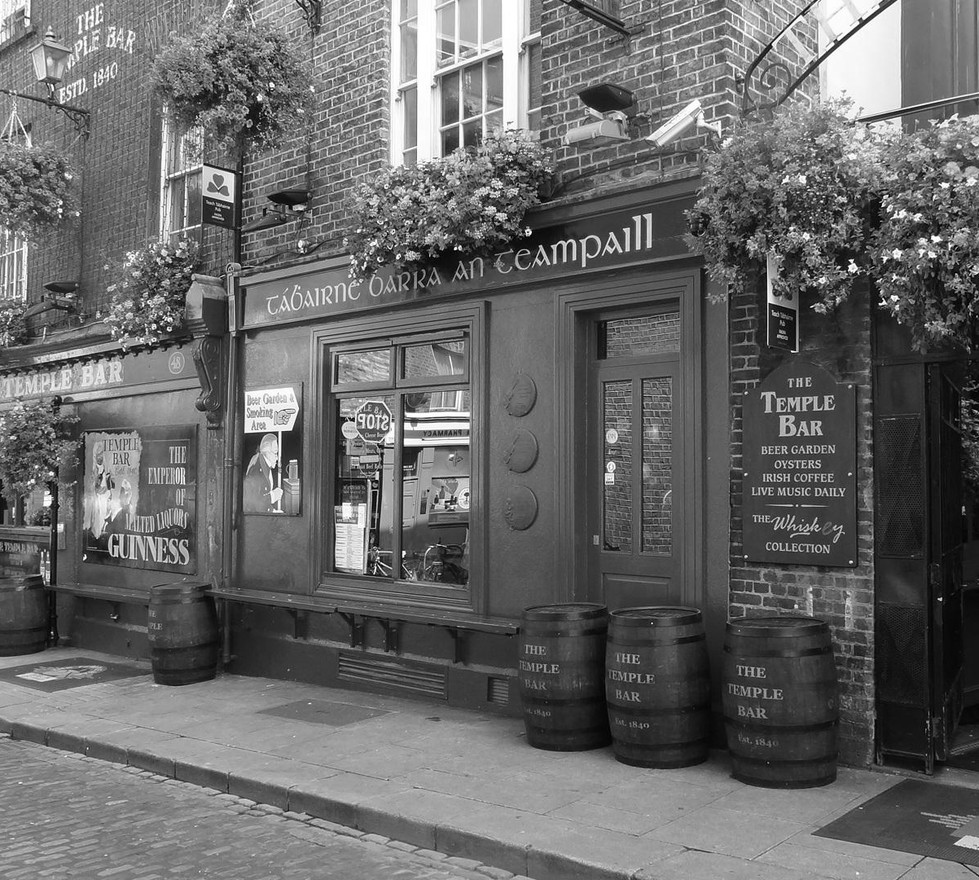
In 2013, I visited Dublin for the first time.
I had wanted to go for a while. A Hungarian friend I had met while volunteering with the EU in 2012 was working at Google's Dublin office — one of the thousands of young Europeans who had quietly moved to a city that, at the time, most people on the continent thought of as rainy, peripheral, and charmingly irrelevant to the serious business of European technology.
She was already there. Google was already there. A long list of companies I would only later understand the significance of were already there.
I didn't make it in 2012. Life intervened, as it tends to. But in 2013, I finally went — with my then-wife. And somewhere in that city, in a moment I still remember clearly, I proposed.
The marriage did not last. Dublin, however, did exactly what Dublin always does.
This week, OpenAI announced that it is moving its EU headquarters to the Tropical Fruit Warehouse in Dublin's Docklands — 88,000 square feet, 250 new jobs over the next two years, a formal commitment to a city that has been quietly accumulating the infrastructure of the AI era for longer than most people noticed.
I am not surprised.
Dublin figured out something in the 1990s that most European cities are still trying to understand: that the way to become a technology capital is not to announce that you intend to become one. It is to build the conditions — low corporate tax, English language, educated workforce, EU membership, regulatory openness — and then get out of the way while the companies decide for themselves.
Google came. Then Facebook. Then Twitter. Then Salesforce, LinkedIn, Airbnb, Stripe. The list is not a coincidence. It is the compound result of three decades of consistent policy and a city that understood, before anyone else in Europe, that attracting the next generation of technology investment required thinking like a founder, not like a government department.
OpenAI's choice of Dublin is not a statement about Dublin's culture or its weather or its charm, though it has all three in abundance. It is a statement about regulatory environment, talent density, and the particular advantage of being inside the EU while maintaining a legal and tax framework that makes rapid growth easier than almost anywhere else on the continent.
I have lived in Malta for twelve years. I have spent much of that time building FreeMalta — Malta's first AI-native platform — and, more recently, becoming an Official OpenAI Select Partner. I think about these questions constantly: what makes a small place punching above its weight in technology, and what makes another small place miss the window entirely.
Malta and Ireland have more in common than most people realise. Both are small islands on the edges of Europe. Both are English-speaking EU members. Both have used regulatory strategy and tax policy to attract international business. Both have concentrated technology ecosystems in cities — Dublin's Docklands, Malta's iGaming corridor — that punch significantly above their geographic weight.
The difference, at this moment, is scale and category. Ireland attracted the first wave of US technology companies when the opportunity was still obvious. Malta attracted iGaming when that window was open. The question now — for Malta, for every small EU jurisdiction — is which category comes next, and who moves fast enough to be the obvious choice before the obvious choice becomes obvious to everyone.
AI is that category.
OpenAI in Dublin is not a ceiling for Ireland. It is a signal that the infrastructure being built there — the talent, the regulatory framework, the density of AI-native companies and researchers — is now visible enough to attract the defining company of the current technological moment.
FreeMalta is an Official OpenAI Select Partner. We are building AI infrastructure in Malta — not at the scale of Dublin's Docklands, not yet, but from the same conviction that small places with the right conditions can be part of something much larger than their geography suggests.
In 2013, I proposed in Dublin to someone I would later divorce. The city I proposed in went on to become OpenAI's European home.
Some places just know where they are going before you do.
Malta is still deciding. The window is still open. But windows, as Dublin demonstrated, do not stay open forever.