
HubSpot Is Changing. Nearly 660 People Are Losing Their Jobs.
I admire Dharmesh Shah. I was an early YouSpot user. That makes this story more uncomfortable, not less. I like Dharmesh Shah. Let me put that at the beginning, before this becomes...

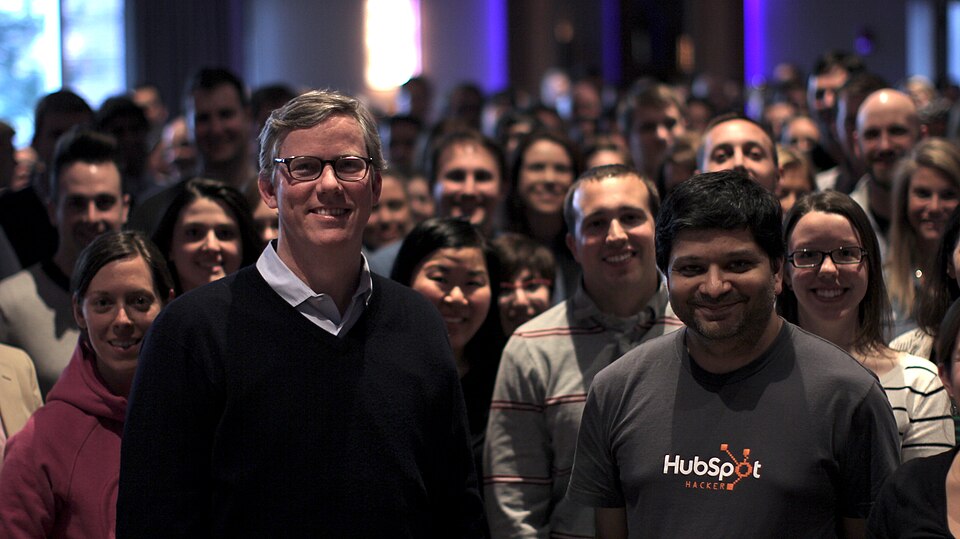
I admire Dharmesh Shah. I was an early YouSpot user. That makes this story more uncomfortable, not less.
I like Dharmesh Shah.
Let me put that at the beginning, before this becomes another article in which somebody discovers a layoff announcement and appoints themselves the prosecutor of the technology industry.
I admire him. I was one of the early people using YouSpot, and I thought it was excellent.
So when HubSpot announced on October 6 that it would reduce its workforce by approximately 7%, affecting nearly 660 people, I did not read it with the satisfaction of somebody watching a company they dislike stumble.
I read it as somebody who likes what is being built.
That is a harder place to stand. HubSpot’s announcement
The distinction matters
HubSpot CEO Yamini Rangan says the decision is not driven by AI-related efficiencies. The stated rationale is an organizational change accompanying a strategic shift: from providing software that helps customers grow to delivering outcomes with AI.
The company describes fewer management layers, clearer ownership, and product teams organized around customer outcomes. The CEO’s explanation
We should take that distinction seriously.
There is no evidence in this announcement that a model was handed 660 job descriptions and successfully performed all of them.
But I think there is another question underneath it.
What happens when the future a company is building no longer fits the organization that helped it get there?
You can keep your job and learn a new tool. You cannot personally retrain your way out of an organizational layer that leadership has decided should no longer exist.
Those are different problems. We keep discussing them as if they were the same.
We have been here before
In August, I wrote about monday.com’s layoffs and the SaaSpocalypse.
Its restructuring involved approximately 20% of the workforce and was explicitly connected to its strategic focus on an AI Work Platform. That connection appears in the company’s own financial disclosures, not just in somebody’s dramatic headline. monday.com’s filing
HubSpot is not monday.com. The businesses, decisions and percentages are different.
Still, the question I was asking then has not gone away.
When software promises to do more of the work, rather than merely give us a place to manage it, what else has to change?
My reading is that the pressure does not stop at the product interface. It can reach the assumptions around which an entire company was organized.
That does not prove every restructuring is necessary. It does not prove every affected role was obsolete. A company’s explanation is its explanation, not an independent verdict.
But dismissing the whole thing as corporate theatre would also be too easy.
Sometimes the strategic change is real.
So is the person losing their job.
YouSpot is why I cannot write the easy version
Dharmesh describes YouSpot as an AI-native CRM for one-person businesses, launched through HubSpot Next. It connects to tools people already use and builds business context around relationships, follow-ups and opportunities. Dharmesh’s account of YouSpot
That matters to me because I am a solo founder.
I do not want to spend the evening maintaining a system that was supposed to make my working day easier. I want to build something, finish something, and occasionally close the laptop.
Go for a walk with Diana.
Have a life that is not permanently waiting for the next administrative task to be completed.
When I used YouSpot, that promise made sense to me.
And this is the uncomfortable part: the same promise that feels liberating from my side of the screen can arrive alongside upheaval somewhere else.
I am not saying YouSpot caused these layoffs. Nothing I have read establishes that, and turning an interesting product into a convenient villain would be dishonest.
I am saying I cannot celebrate the freedom these tools give me and refuse to look at the wider transition.
I benefit from it.
That gives me a reason to pay attention, not an exemption.
Please do not turn people into proof
There is a particularly unpleasant habit in the AI conversation.
A company announces layoffs, and immediately somebody treats the number as evidence that their favourite prediction was correct.
The optimist sees efficiency.
The pessimist sees collapse.
The person who lost their job gets converted into supporting material for both arguments.
I do not want to do that.
Nearly 660 people are not a product demonstration.
We do not need to invent their individual circumstances to understand that losing a job reaches beyond an employment contract. The next month changes. Plans need adjusting. Confidence can take a hit even when the decision had little to do with the quality of somebody’s work.
HubSpot’s announcement sets out severance and transition support. That deserves acknowledgement. It does not cancel the loss. The published support arrangements
A transition can be handled with care and still hurt.
Both things can be true without either becoming a slogan.
I still want the future
I am not going to pretend I want less capable technology because this story makes me uncomfortable.
I want better tools. I want small teams and independent founders to be able to do things that once required resources they could never afford.
I have built too much with AI to deny that possibility.
But I do not want enthusiasm to become a rule against asking difficult questions.
Was the restructuring well judged? What knowledge leaves with the people leaving? What happens to the people staying? Does the new organization actually serve customers better?
Those questions will be answered by what happens next, not by how persuasive the announcement sounds today.
My respect for Dharmesh remains. So does my enthusiasm for YouSpot.
Neither requires me to make this news comfortable.
I can like what HubSpot is building and care about the people who will not be there to build the next part.
If we cannot hold those two thoughts together, we are not really discussing the future of work.
We are choosing which half of the story we prefer to see.
Ilhan Irem Yuce
Founder of FreeMalta and MaltaInsider. Living and building in Malta for 12 years. These pieces come from asking questions, making things and paying attention to what the polished version leaves out.
Explore the work
Claude Helped Me Build Four Platforms. Today, I Asked for More Than Credits.
Today I applied to Claude Startups. A few hours earlier, I was joking that Claude should go and make tea. Both things can be true. I have no interest in turning a software subscription...

LinkedIn Is Selling You Three Things. None of Them Work.
LinkedIn has a remarkable ability to make you feel like you are doing something productive while you are actually doing something that benefits LinkedIn. You are posting content to...

Russia Didn't Want Her. Kazakhstan Did. Now She's World Number One.
Elena Rybakina won the US Open on Sunday. Discipline beat rage. But the story starts before the match — with a rejection from Russia and a Kazakh oligarch who saw what they missed.
Something worth
saying belongs here.
Bring the experience, the decision and the evidence. Paid stories are labelled; the reader should never have to guess.
Discuss a partner story