Russia Didn't Want Her. Kazakhstan Did. Now She's World Number One.

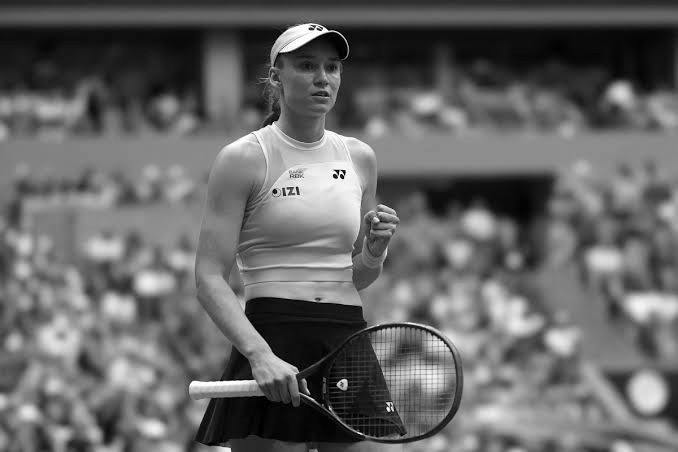
I have loved tennis since I was a child. I never learned to play it properly — padel is the closest I get these days — but I have watched it my whole life. I know the difference between a player who is executing and a player who is surviving. On Sunday at Flushing Meadows, Elena Rybakina was executing. Aryna Sabalenka was surviving, and then she wasn't.
The final score will tell you the result. It won't tell you what actually happened.
Rybakina won because she never changed. From the first game to the last, she played the same tennis — composed, precise, physically relentless. Sabalenka, who is a genuinely brilliant player and one of the most entertaining personalities on tour, lost because she couldn't stop fighting herself. You could see it in her body language after each unforced error. The racket. The muttering. The visible effort to reset, followed by the failure to reset. By the time she found her composure, the match was already decided.
This is not unusual for Sabalenka. She is extraordinary when she is in flow and fragile when she isn't. The question tennis has been asking about her for three years is whether she can win the big ones when the flow doesn't come. Sunday gave us an answer.
But I want to talk about Rybakina. Because her story is stranger and more interesting than her tennis, which is already very interesting.
What Russia Decided About Her
Elena Rybakina was born in Moscow on 17 June 1999. She grew up there, trained there, competed in gymnastics and skating before switching to tennis because her height — she would eventually reach 184 centimetres — made the other sports increasingly complicated. She joined the Spartak Tennis Club in Moscow and trained alongside former top-10 player Andrei Chesnokov.
By 2018, she was ranked 175 in the world. She was 19 years old and had been playing professional tennis for four years. The Russian tennis establishment looked at her results and reached a conclusion: she was not ready to compete at the top level. The financial and institutional support that Russia provides to its most promising players would go elsewhere.
This is the decision that changed everything — not just for Rybakina, but for Kazakhstan, for Wimbledon, and for the geopolitical theatre that professional tennis became after February 2022.
Kazakhstan was looking for players. The country had the money and the infrastructure to develop tennis talent but lacked the players to make its mark on the international game. A Kazakh oligarch — the specific details of who initiated the contact vary by account, but the mechanism is well documented — extended an offer to Rybakina: come and represent Kazakhstan, and we will give you the support Russia decided not to give you.
She accepted. In 2018, Elena Rybakina began competing under the Kazakh flag.
What Happened at Wimbledon in 2022
On 24 February 2022, Russia invaded Ukraine. The consequences for international sport arrived within weeks. Wimbledon banned all Russian and Belarusian players from the 2022 Championships. Daniil Medvedev, the world number one men's player. Victoria Azarenka, a two-time Grand Slam winner. Gone.
Elena Rybakina was not banned. She had been representing Kazakhstan for four years. She was, by the rules of the All England Club's own decision, eligible to compete.
She won the tournament.
The Russian tennis federation's president, Shamil Tarpischev, watched her beat Ons Jabeur in the final and told the Russian press: "She is our product." The same institution that four years earlier had decided she was not ready to compete at the top level was now claiming credit for her Wimbledon title.
Rybakina, who by all accounts is a remarkably composed person, handled the question of her nationality with the same equanimity she brings to the baseline. "I'm playing for Kazakhstan for a long time," she said. "They believed in me." She declined to perform the geopolitical drama the press was inviting her to perform.
The Discipline Question
I watch a lot of tennis. One of the things that separates the very best players from the merely excellent ones is the ability to maintain the same level of emotional regulation at 5-5 in the third set as they had at 1-0 in the first. The score is different. The pressure is different. The body wants to respond to that differently. The great players override the body.
Rybakina does this as well as anyone I have watched. She has a serve — one of the biggest in women's tennis, approaching 200 km/h — that would be dangerous on its own. But what makes her genuinely difficult to beat is that she doesn't seem to need the serve to be working to stay in the match. When it's not landing, she doesn't panic. She adjusts. She waits.
Sabalenka is the opposite. When Sabalenka is executing, she is one of the most exciting players in the world to watch. The power, the movement, the personality — it's all there. But she carries her emotions at surface level in a way that becomes expensive in the close matches. You can see exactly when she has started to lose confidence, because she tells you with her body. Rybakina never tells you anything.
On Sunday, the match turned in the second set. Sabalenka had been playing well but began to make errors at the wrong moments. Each error produced a visible reaction. Each visible reaction produced the next error. Rybakina watched all of this from the other end of the court and kept hitting her ball. She didn't press. She didn't try to accelerate the collapse. She just kept doing what she had been doing, and Sabalenka's collapse arrived on its own schedule.
This is a skill. It is also, I think, a personality. The same person who accepted Russia's rejection without apparent bitterness, moved to a country she had no particular connection to, and built a Grand Slam-winning career without drama or complaint — that person plays tennis the way she navigates her career. Quietly, persistently, without requiring the circumstances to be in her favour.
What Kazakhstan Got For Its Investment
Kazakhstan has now produced a Wimbledon champion, a US Open champion, and the world number one women's tennis player. All from one decision made in 2018, when a 19-year-old ranked 175 in the world needed someone to believe in her and Russia decided not to.
The oligarch who made that offer will not be named in many articles about Rybakina, because the story of a Kazakh billionaire funding a Russian tennis player's career is complicated in ways that journalists prefer to simplify. But the mechanism matters. Talent development in elite sport is expensive. The countries and institutions that are willing to invest in players before those players have proven themselves are the ones that produce champions. Kazakhstan made a bet on Rybakina when she was worth nothing by Russia's assessment. The return on that bet is now visible at every Grand Slam.
Russia, meanwhile, got a federation president who congratulated her and called her "our product." They got the credit without the investment.
The Match, Again
I started watching tennis as a child because I loved the individual nature of it. No teammates to blame. No collective performance to hide behind. Every point is yours to win or lose, and the best player over the course of a match wins, almost always.
Sunday was a good match for that reason. Two of the best players in the world, at a major final, and the outcome was decided by something real — not luck, not draw brackets, not the surface favouring one style over another. Rybakina was more disciplined. Sabalenka was less. The score reflected that accurately.
Rybakina is world number one now. The player Russia said wasn't ready at 19 is, at 27, the best women's tennis player on the planet.
Kazakhstan knew before Russia did.
FreeMalta covers sport, business, and the stories behind the headlines. This article reflects the personal perspective of the author.