Patrick Collison's Quiet Revenge: The Irish Kid Who Is About to Buy PayPal

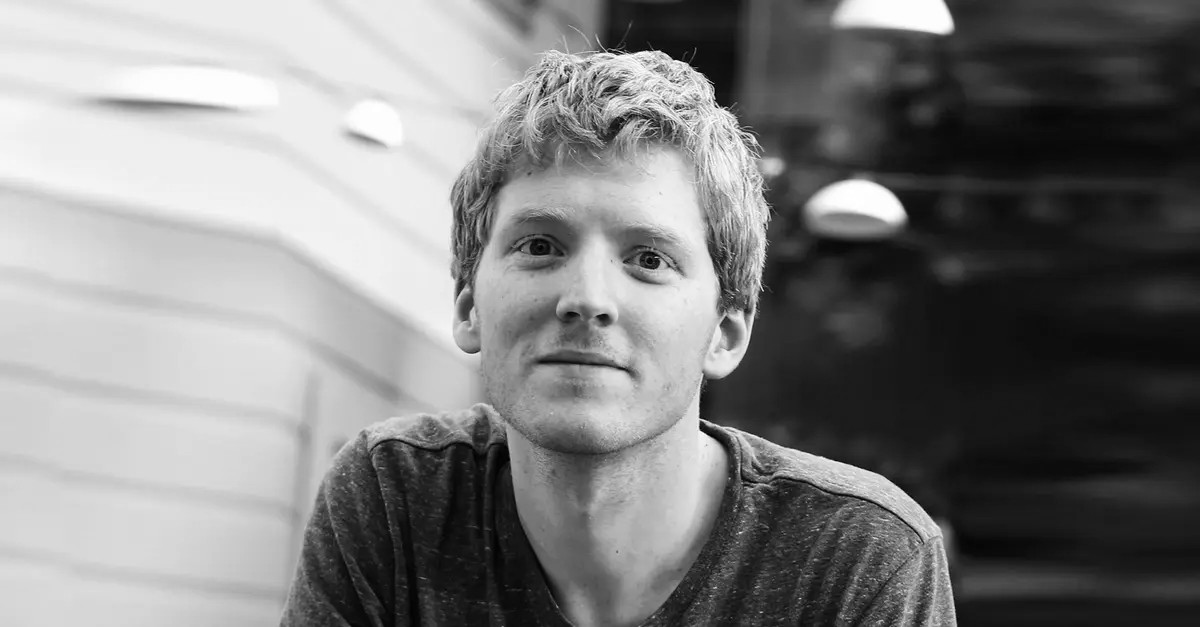
I have a theory about Irish people and ambition.
It is not a polite theory, so I will state it plainly: the Irish have a specific relationship with leaving. They have been leaving for centuries — for America, for Australia, for London, for wherever the calculation worked out better than home. And somewhere in that history of departure, they developed a particular kind of hunger. Not the loud kind. The quiet kind. The kind that doesn't announce itself at dinner parties but shows up, fifteen years later, in the form of a $70 billion company.
Patrick Collison was nineteen years old when he started building what would become Stripe. He was from Limerick — not Dublin, not the kind of place that produces tech founders in the popular imagination. He had a brother named John, who was sixteen. Together they had an observation so simple it embarrasses everyone who missed it: paying for things on the internet was absurd.
Not difficult. Not merely inconvenient. Absurd. In the way that Camus meant absurd — the gap between what the world is and what it obviously should be, staring you in the face, while everyone around you has decided to accept it.
PayPal existed. Everyone knew this. Everyone pointed to it. Patrick Collison looked at it and said: yes, but not for developers. Not for the person who wants to add a payment form to a website without reading three hundred pages of documentation and calling a sales representative and waiting six weeks for an account to be approved.
Seven lines of code. That was Stripe's pitch. You write seven lines of code and you can take money from anyone, anywhere, instantly. The simplicity of it was almost offensive.
What happened next
The Y Combinator partners funded them in 2010. Peter Thiel — Elon Musk's former PayPal co-founder — invested. Sequoia came in. The Valley, which had watched PayPal become a giant and assumed the payments problem was solved, suddenly realized it wasn't.
Stripe did not try to be PayPal. This is the critical thing. Stripe went underneath PayPal — into the infrastructure layer, into the developer tooling, into the part of the internet that consumers never see but that every transaction runs through. While PayPal was building a consumer brand, Stripe was becoming the plumbing.
Amazon uses Stripe. Google uses Stripe. Shopify, which is itself a company worth more than most banks, runs on Stripe. The internet's economy, to an extent that most people don't realize, runs on something Patrick and John Collison built in a shared apartment when one of them was not yet old enough to drink in the United States.
Stripe is now valued at $70 billion. Patrick is 36 years old.
The $53 billion offer
This week, a report emerged that Stripe and Advent International are in discussions to acquire PayPal. The price being discussed: $53 billion.
I want you to sit with the geometry of this for a moment.
PayPal was founded in 1998. It was the original internet payments company. Peter Thiel and Elon Musk and a group of people who went on to become the most influential investors in Silicon Valley built it, sold it to eBay, watched it spin out, and made it into one of the defining brands of the early internet economy.
And now the Irish kid who looked at PayPal in 2010 and said "yes, but not for developers" is reportedly about to buy it.
This is not a story about disruption. Disruption is a word consultants use when they want to sound interesting at conferences. This is a story about patience. About building something so quietly useful that by the time anyone noticed how large it had become, it was already the infrastructure.
On Patrick Collison specifically
He is not Elon Musk. He does not have a personal brand that precedes him into rooms. He does not post about the meaning of civilization or the timeline for Mars colonization. He reads philosophy. He is interested in scientific progress in a way that suggests he has actually thought about it, not just used it as a cocktail party position. He started Stripe Press, a publishing house that produces beautiful books about ideas. This is not something a man who is purely interested in money does.
He also did not sell. Stripe itself has been valued at $70 billion and has received acquisition interest from companies that would have made Patrick and John extraordinarily wealthy and retired. They did not take it.
The Collison brothers are not building toward an exit. They are building toward something else — something that looks, from the outside, like the kind of ambition that doesn't have a finish line.
The Malta connection
Malta runs on payments infrastructure in ways that most people here don't think about. iGaming, fintech, the entire digital economy that has grown up around the MGA and the cluster of financial services companies that chose this island — all of it runs through payment rails. Some of those rails are Stripe.
The companies on this island that are trying to move money internationally, pay employees across borders, accept cards from customers in forty countries — they are, in many cases, running on something Patrick Collison built in an apartment when he was nineteen.
He doesn't know Malta exists, almost certainly. But Malta knows Stripe, whether it realizes it or not.
The epilogue that hasn't happened yet
The PayPal acquisition is not confirmed. These things fall through. Valuations get disputed, boards get cold feet, regulators get involved. $53 billion is a large number and large numbers attract complications.
But the story is already complete even if the deal never closes. The Irish kid from Limerick built something that made the people who built PayPal consider selling it to him. That's the ending. Whether or not the paperwork gets signed is almost beside the point.
Patrick Collison is 36. He has time.
--- FreeMalta covers the business stories that matter to Malta's digital economy. For international payments infrastructure and how it affects Malta-based companies, the International Payments guide and Business Banking pages have the practical layer. Stripe's company profile is in The Garage.