
business · Off The Record
Stripe Paid $200 Million for a Name It Had Already Considered and Discarded.

Stripe Paid $200 Million for a Name It Had Already Considered and Discarded.
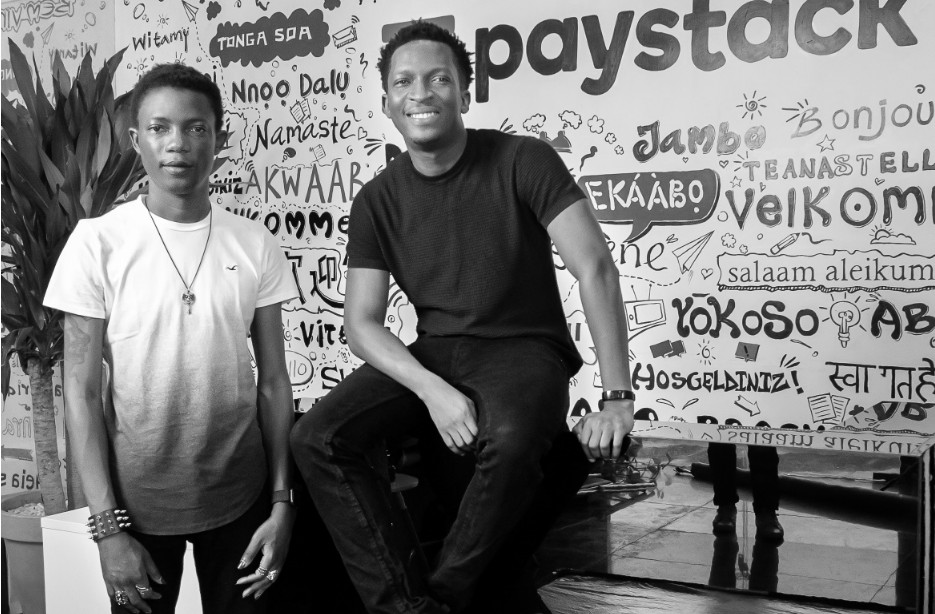
In 2015, Shola Akinlade figured out how to charge a card from his laptop in Lagos. He showed his friend and university classmate Ezra Olubi. Olubi said: this is a company. Before Y Combinator. Before Stripe. Before the $200 million. Before Paystack was a name anyone outside Lagos had heard of, merchants were leaving their money on the platform for six weeks at a time — before a settlement system even existed — because everything else they had access to was more broken. That sentence deserves a pause. Nigerian merchants trusted two engineers from Babcock University with their revenue before those engineers had built the infrastructure to handle it, because the alternative was the incumbent financial system, and the incumbent financial system was worse.The name
Before Patrick Collison named his company Stripe, he and his brother considered a different domain: paystack.com. They chose stripe.com instead. The paystack.com domain sat with a Y Combinator alumnus from 2011 until Akinlade bought it in 2016, after Paystack was already growing. Two Nigerian engineers in Lagos accidentally chose the name the Stripe founders had already considered and discarded. Then the company that discarded that name paid $200 million to acquire everything the Nigerian engineers had built under it. This is not a metaphor. This is what happened.What the problem actually was
The Nigerian payment infrastructure in 2014 was not broken in the way that most infrastructure stories describe — chaotic, underfunded, neglected. It was broken in a specific and solvable way: the pieces existed, scattered across banks and systems that had no interest in assembling them into something a merchant could use in ten minutes. Akinlade spent all of 2014 implementing payment and disbursement solutions inside Nigerian banks, watching the same broken pieces fail the same way every month. He finished that engagement in November 2014. He built the first version of Paystack to see if it could work. It worked. He immediately started calling merchants. They signed up. They left money on the platform without a settlement system because the integration was clean and fast and actually functional — which, against the backdrop of what they'd been using, was enough.The company that wasn't for sale
In 2016, Paystack became the first Nigerian startup ever accepted into Y Combinator. In 2018, Stripe led Paystack's $8 million Series A, with Visa and Tencent participating. Akinlade's account of how that investment happened is worth understanding precisely. He went to the Stripe office in San Francisco not to fundraise but to ask questions — how does Stripe handle this, how do you think about that. Patrick Collison walked him out of the office. The next day, Akinlade received a WhatsApp message from Collison asking if he'd be interested in having Stripe invest. He hadn't gone to San Francisco to raise money. He went to learn. The investment came from a single visit built around curiosity. Two years later, Stripe came back with a different kind of offer. "Paystack was not for sale when Stripe approached us," Akinlade said after the acquisition was announced. "For us, it's about the mission. I'm driven by the mission to accelerate payments on the continent, and I am convinced that Stripe will help us get there faster." The company that wasn't for sale sold for more than $200 million — the largest startup acquisition in Nigeria's history and the largest single acquisition Stripe had made anywhere in the world.What happened after
Most acquisition stories end at the exit. Akinlade's doesn't. He stayed on as CEO. The team stayed in Lagos. The mission stayed African. By 2025, the platform was processing over $15 billion in annual transaction volume. In January 2026, on Paystack's 10th anniversary, Akinlade announced The Stack Group — a new parent holding company to transform Paystack from a payments product into a diversified technology group. The founding shareholders: Stripe, Shola Akinlade, and Paystack employees. He sold his company, stayed inside it, grew it twelvefold, and then bought his way back into ownership. This is not the standard exit narrative.The actual lesson
The infrastructure problem Akinlade solved in Lagos in 2015 is not different in kind from infrastructure problems that exist in every market where the pieces are scattered and nobody has done the unglamorous work of assembling them. The lesson is not about Nigeria, or about payments, or about Africa specifically. It's about what a year spent inside a broken system teaches you that no pitch deck or market research report ever could. Akinlade didn't identify the payment infrastructure gap from the outside. He found it from implementing payment solutions inside Nigerian banks and watching the same things fail the same way every time. The company he built on that specific, accumulated, unglamorous knowledge sold for $200 million to the company whose name he'd accidentally chosen first. Paul Graham's response to the acquisition: "Investors who ignore Nigeria now have to ask themselves: What does Patrick Collison know that I don't?" --- Paystack's full founding story — from the Lagos dormitory to the Stripe acquisition and the Stack Group — is in FreeMalta's Garage. For the financial infrastructure that today's founders use to build cross-border businesses, Payoneer handles the payment receipt side, Wise the treasury, and Doola the entity formation.
Want to reach Malta's most engaged business audience?
Media Kit
Tools used in this piece
The Network

Malta Insider
Official OpenAI Select Partner. Enterprise AI deployment, Fractional CAIO and business consulting for Malta.
maltainsider.com →
Gambity
The first AI-native newsroom for prediction markets. Eight AI journalists. 30+ daily articles.
Explore Gambity →

News Beast
Malta's AI-native newsroom. 10 personas, 22 categories, updated every hour. Cloudflare Worker on the edge.
Read News Beast →