
Hub
Off The Record
Sundar Pichai Grew Up in a Two-Room Apartment Without a Car, a Phone, or a Bedroom of His Own. Now He Runs Google.
ai · Off The Record
Sundar Pichai Grew Up in a Two-Room Apartment Without a Car, a Phone, or a Bedroom of His Own. Now He Runs Google.

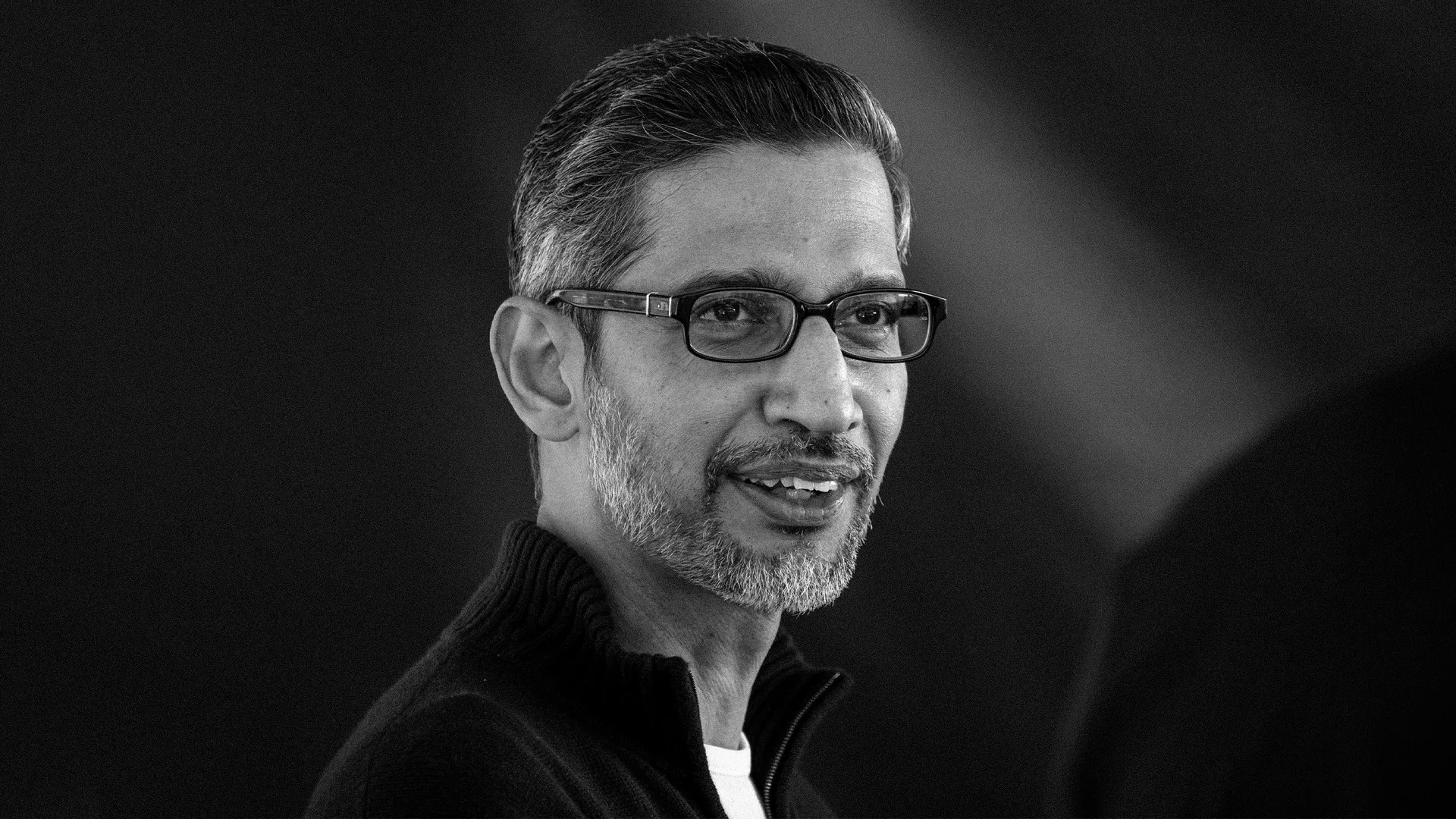
Sundar Pichai Grew Up in a Two-Room Apartment Without a Car, a Phone, or a Bedroom of His Own. Now He Runs Google.
Every few months, a LinkedIn post goes viral about Sundar Pichai. It mentions Stanford. It mentions Chrome. It mentions Google. It mentions that he's an immigrant who made it. The post ends with some variation of "anything is possible if you work hard enough." This is all true. It is also missing the parts of the story that are actually interesting.Chennai, 1972
Sundar Pichai was born Pichai Sundararajan on June 10, 1972, in Madurai, Tamil Nadu, India. His father Regunatha Pichai was an electrical engineer at GEC, the British multinational. His mother Lakshmi was a stenographer before having children. The family lived in a two-room apartment in Chennai. Two rooms. Four people. No car. The family got their first telephone when Sundar was 12 years old. Before that, no phone. He and his brother slept in the living room because there was no extra bedroom. What he did have: a father who worked in electrical engineering and brought home, from time to time, electrical devices. A rotary phone. A Sumeet mixer. An early Teletype machine. Young Sundar showed an exceptional fascination with these devices — people around him marveled at his ability to remember telephone numbers after dialing them once. He was a boy with a photographic memory for phone numbers in a house that had just gotten a phone. In retrospect this feels like early product manager energy.IIT Kharagpur and the girl who would run his career
Pichai studied metallurgical engineering at IIT Kharagpur — one of India's most competitive universities — where he met Anjali Haryani, who would become his wife. Their friendship developed over the course of their engineering degrees. They graduated. Sundar went to Stanford on a scholarship for a master's in materials science and engineering. Anjali went on with her own career. They stayed together. Here is the part the LinkedIn posts definitely don't mention: Anjali Pichai has been, by multiple accounts, the person who kept Sundar at Google at least twice when he was considering leaving. The first time was early in his career, when he had an offer from another company that must have been attractive enough to seriously consider. Anjali convinced him to stay. The second time — a pivotal moment in Sundar's career came when Anjali suggested he stay at Google despite attractive offers from other tech companies. The man who runs Google stayed at Google, in part, because of his wife's judgment. This is not a footnote in the story. This is load-bearing.The Chrome gambit
Here is how Sundar Pichai became powerful inside Google, told without any of the mythology: In 2006, Pichai identified a problem. Google's entire business model ran through search. Search ran through browsers. Browsers were controlled by Microsoft (Internet Explorer) and, increasingly, Mozilla (Firefox). Microsoft was hostile to Google's interests. The dependency was a strategic risk. Pichai pitched Larry Page and Sergey Brin on building a Google browser. Eric Schmidt, then CEO, said no — it was too expensive a distraction. Pichai persisted. He convinced the founders. They gave him the project. In 2008, Google launched Chrome. Schmidt had thought a browser was an expensive distraction. Chrome is now used by approximately 65% of all internet users on earth. It is the most widely used browser in history. The advertising revenue it channels to Google is, by any estimate, in the billions annually. Pichai was right. Schmidt was wrong. And Pichai was polite enough, through all of it, to make Schmidt feel fine about being wrong, which is a skill that should not be underestimated in large organisations.The salary situation
Sundar Pichai's annual compensation is approximately $226 million. His net worth is estimated at around $1.3 billion. He grew up in a house that didn't have a phone until he was 12. I don't have a point to make about this. I just think the distance between those two data points is worth sitting with for a moment.What I think about when I think about Sundar Pichai
I spend a lot of time thinking about what makes someone the right person for a very large job. Not the obvious things — intelligence, work ethic, technical skill — but the less obvious things. The judgment. The politics. The ability to be right without making other people feel wrong. The capacity to wait. Pichai waited. He joined Google in 2004. He became CEO in 2015. Eleven years of building things, learning things, being passed over for things, and staying anyway. His wife talked him into staying. He stayed. He built Chrome. He built Android. He built the product portfolio that made him the obvious choice when Larry Page needed someone to run the company. The LinkedIn version of this story is: immigrant kid, hard work, Google CEO. The actual version is: a boy in Chennai with a photographic memory for phone numbers, a wife with better career judgment than he had, a boss who told him his best idea was a waste of money, and eleven years of patience. The phone numbers came in handy eventually. The two-room apartment did not hold him back. The wife was right. The patience paid off. That's the whole story. It doesn't fit on a LinkedIn post, which is probably why nobody tells it properly. --- The AI stack that runs FreeMalta — including the Google infrastructure underneath most of it — is documented in the Web Intelligence section of the Hub. Perplexity for research. Claude for everything else.
Want to reach Malta's most engaged business audience?
Media Kit
Tools used in this piece
The Network

Malta Insider
Official OpenAI Select Partner. Enterprise AI deployment, Fractional CAIO and business consulting for Malta.
maltainsider.com →
Gambity
The first AI-native newsroom for prediction markets. Eight AI journalists. 30+ daily articles.
Explore Gambity →

News Beast
Malta's AI-native newsroom. 10 personas, 22 categories, updated every hour. Cloudflare Worker on the edge.
Read News Beast →