
Hub
Off The Record
Wise Just Paid an Undisclosed Sum for a Website. It's the Smartest Thing They've Done.
business · Off The Record
Wise Just Paid an Undisclosed Sum for a Website. It's the Smartest Thing They've Done.

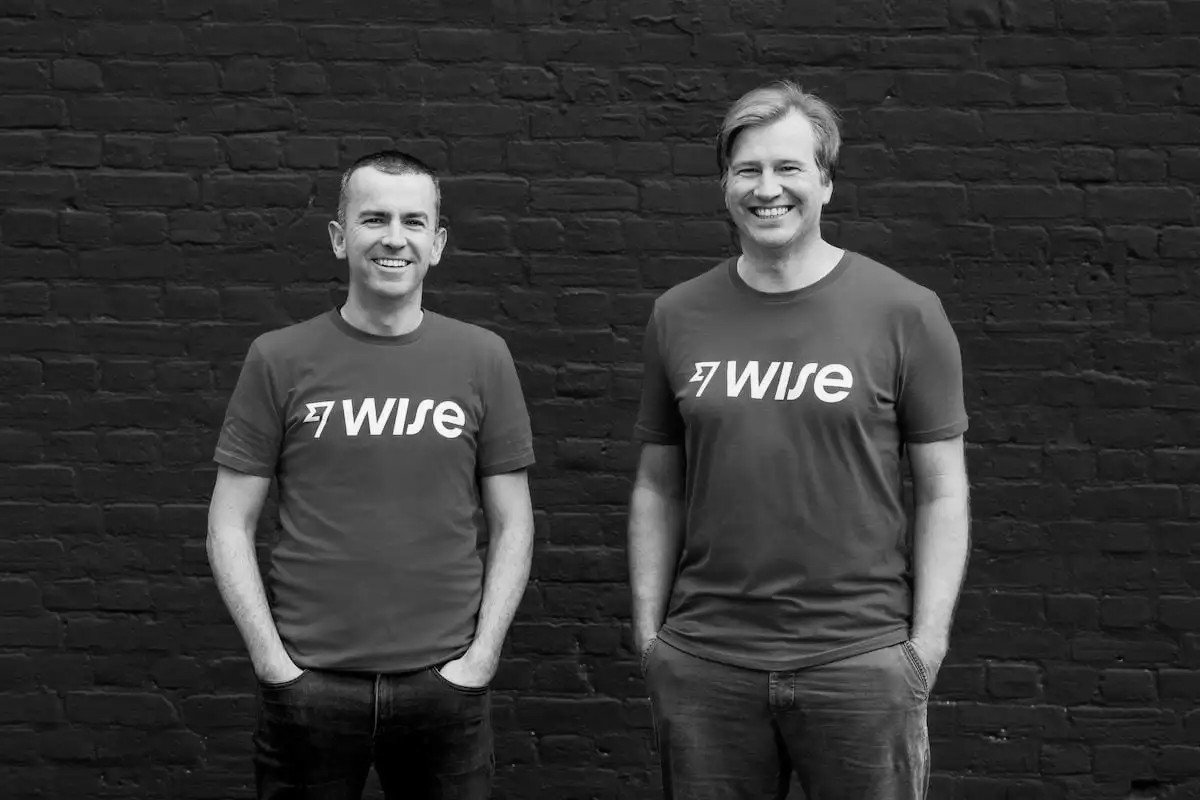
Wise Just Paid ~$250 Million for a Website. It's the Smartest Thing They've Done.
Ten years ago, Wise didn't exist. It was called TransferWise. I was one of the first people using it in Malta — because I had to send money to Turkey regularly, and every other option available to me in 2014 was either expensive, slow, or both. TransferWise was neither. I found it, used it, and kept using it long before Revolut existed and long before "fintech" was a word anyone said at dinner. Today, Wise is my primary account. When I need to send money to Turkey, it's the first thing I open. That relationship didn't start with an advertisement. It started with a problem I had, a product that solved it, and ten years of it continuing to work. Wise just acquired Expatica — a 26-year-old expat information platform with 7 million annual visits — for a sum the company hasn't disclosed. They bought the moment before that relationship starts. The moment when someone is still reading about where they're going, not yet thinking about how they'll move their money. It is the correct move. It is, strategically, the correct move.What Expatica actually is
Expatica was founded in 2000 and provides practical, locally relevant guidance for people living internationally — relocation, housing, healthcare, immigration, finance and everyday life. In 2025, it reached more than 7 million visits, with its largest audiences in France, Germany, Portugal and Spain. Twenty-six years old. Seven million visits. No viral product launch, no Series D, no AI pivot. Just consistent, reliable, locally specific information for people navigating life in a country that isn't theirs. The kind of content that ranks in Google because it genuinely answers questions people have, not because an SEO team reverse-engineered a keyword strategy. The price is unconfirmed by Wise but deal-tracking outlet Windsor Drake pegged it at roughly $250 million. That is approximately $35 per annual visitor. For context, that is not an expensive audience when the audience is expats — people with ongoing, complex, expensive financial needs across multiple currencies, jurisdictions, and life events.The playbook Wise is running
This acquisition follows a pattern that Deel, Remote, and others have executed in adjacent categories: own the moment before the financial transaction, and the financial transaction follows naturally. By acquiring a trusted repository of locally relevant information, Wise is effectively extending its value proposition from the payment rail itself to the entire administrative and logistical process of migration. By owning the informational top-of-funnel, Wise secures a captive audience well before they make their first transfer. The logic is clean. Someone planning to move to Germany reads Expatica's guide on opening a German bank account. At the bottom of the guide: a recommendation for Wise. They are already on an Expatica page they trust, reading information that has accurately described the rest of the process. The conversion rate on that recommendation is structurally higher than any paid acquisition channel Wise could buy. Wise already serves around 19 million people and businesses globally, many of whom live outside their home country. Expats are not a segment of Wise's customer base — they are its core. Every person who holds money in multiple currencies, sends money to family in another country, gets paid in one currency and spends in another — that is an expat. That is Expatica's reader. The overlap is nearly complete.What this means for content platforms
I want to be direct about something, because it is directly relevant to FreeMalta. What Wise paid for is not technology. Expatica does not have a proprietary algorithm. It does not have a data moat in the traditional sense. It has trust — accumulated over 26 years of answering questions correctly, in the right language, for the right audience, at the right moment in their lives. The acquisition strategy positions Wise to capture user attention at an earlier stage of the relocation decision-making process. Trust, built through content, is an acquisition target. That is the sentence the Wise-Expatica deal proves. FreeMalta is not Expatica — different scale, different stage, different geography. But the underlying model is identical: build the most useful, most trusted resource for people navigating life in Malta, and the financial and business decisions that follow are naturally connected to that trust. Wise didn't buy Expatica because it had 7 million visits. It bought Expatica because those 7 million people were in a specific state of mind — open, researching, looking for guidance, about to make significant financial decisions — and Expatica had earned their attention at that moment. That is what FreeMalta is building for Malta.The Deel and Remote parallel
Deel acquired PayGroup and Zavvy. Remote acquired Sayari, Omnipresent, and several smaller payroll providers. The pattern across all of these is the same: as the cost of building distribution from scratch exceeds the cost of buying it, companies that have accumulated trust and audience become acquisition targets rather than competitors. The companies doing the acquiring are not buying tools. They are buying relationships. They are buying the permission to be present at a moment in someone's life when they need help. Expatica had that permission for 26 years. Wise bought it for $250 million. The question for any content platform is not "when will someone acquire us" — it is "what is the permission we are accumulating, and who will eventually want to buy it." Twelve years ago, I read websites like Expatica before moving to Malta. I don't remember the financial products from that time. I remember the information. That memory is worth $250 million, apparently. --- Wise is FreeMalta's recommended business banking partner for cross-border payments and multi-currency management. The full Business Banking comparison covers Wise alongside Revolut Business, N26, and Malta's local banking options — everything you need to move money in and out of Malta.
Want to reach Malta's most engaged business audience?
Media Kit
Tools used in this piece
The Network

Malta Insider
Official OpenAI Select Partner. Enterprise AI deployment, Fractional CAIO and business consulting for Malta.
maltainsider.com →
Gambity
The first AI-native newsroom for prediction markets. Eight AI journalists. 30+ daily articles.
Explore Gambity →

News Beast
Malta's AI-native newsroom. 10 personas, 22 categories, updated every hour. Cloudflare Worker on the edge.
Read News Beast →