
Hub
Off The Record
Zuckerberg Paid $14 Billion for a 28-Year-Old. Here's Why That Still Might Not Be Enough.
ai · Off The Record
Zuckerberg Paid $14 Billion for a 28-Year-Old. Here's Why That Still Might Not Be Enough.

Zuckerberg Paid $14 Billion for a 28-Year-Old. Here's Why That Still Might Not Be Enough.
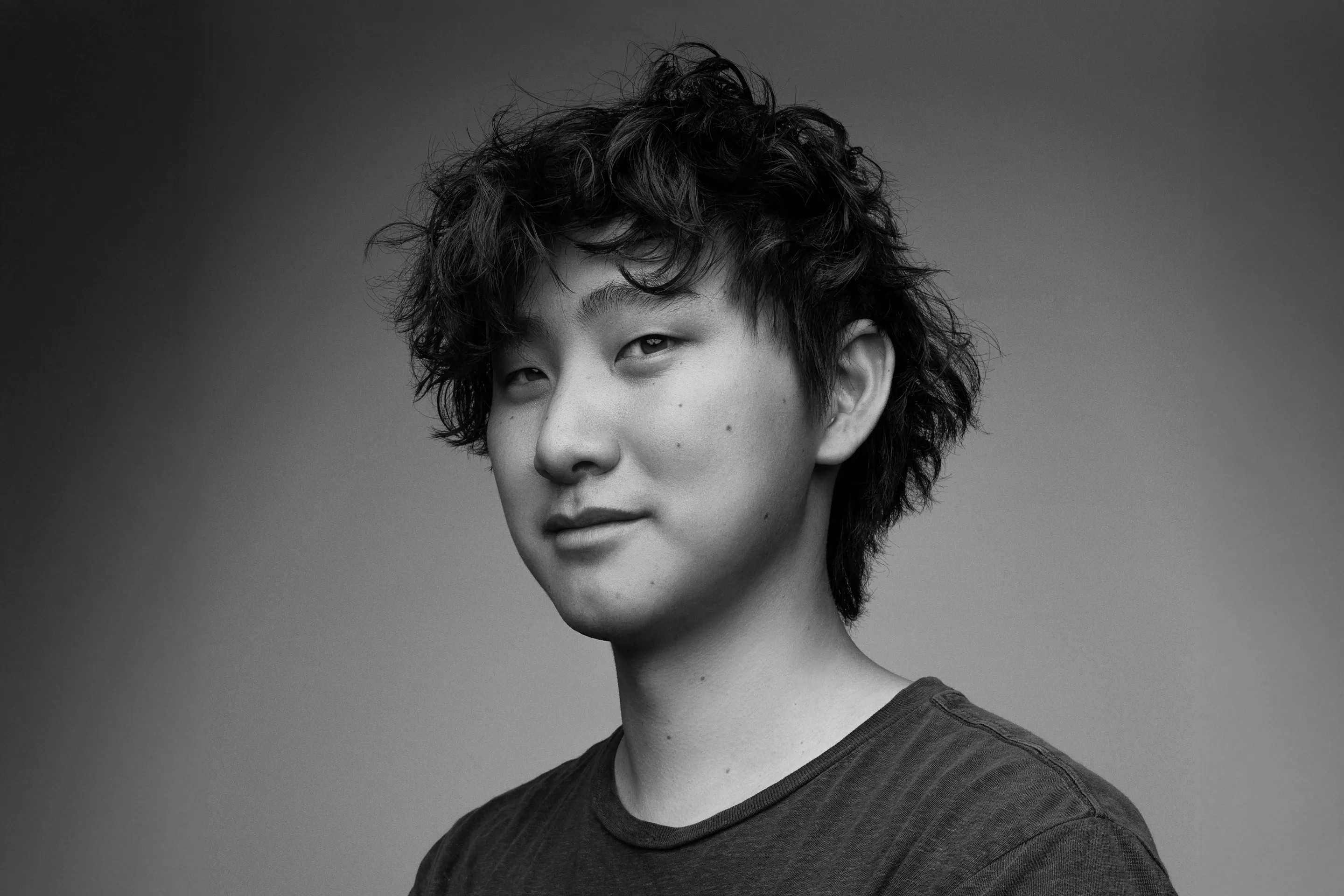
Alexandr Wang was born in Los Alamos, New Mexico — the town built to house the Manhattan Project. His parents were Chinese immigrants who worked as physicists at Los Alamos National Laboratory. He grew up surrounded by scientists who understood, firsthand, what happens when technology outpaces governance. At 19, he dropped out of MIT after his freshman year and founded Scale AI. At 24, he became the youngest self-made billionaire in the world. At 28, Mark Zuckerberg paid $14.3 billion for 49% of his company and handed him the title of Chief AI Officer at Meta's newly created Superintelligence Labs. The net worth estimates range from $3.2 billion to $3.6 billion. He is dating Kiernan Shipka — the actress who played Sally Draper in Mad Men, a character defined by watching adults navigate a world of performance, status, and unspoken power. Whether the parallels are discussed over dinner is unknown. That they exist is undeniable. But here is the thing nobody is saying clearly about the Wang-Meta deal: the money is real, the title is real, the talent is real — and Meta might still be losing the AI war regardless.What Scale AI actually did
Before Wang, the AI industry had a problem it didn't like to talk about. Large language models need training data. Training data needs to be labeled — tagged, categorised, evaluated, corrected by humans who look at millions of examples and tell the model what's right and what's wrong. The process was manual, slow, expensive, and nobody glamorous wanted to do it. Wang saw the bottleneck and built the infrastructure around it. Scale AI employed over 240,000 contract workers annotating images, text, and video. If Nvidia made the picks and shovels for the AI gold rush, Scale trained the miners how to use them. By 2024, Scale's revenue reached $870 million. Its client list included the US Air Force, the US Army, and every major AI lab that wanted its models to actually work. Wang became the world's youngest self-made billionaire at 24 in 2021, and his wealth has roughly tripled since then. The origin story of Scale AI is, depending on your perspective, either a parable about entrepreneurial insight or a very expensive story about food theft. Wang suspected a roommate was stealing his groceries at MIT and built a facial recognition system to monitor his refrigerator. He couldn't confirm anything because of the volume of footage — but he realised that AI progress wasn't limited by algorithms. It was limited by data. Scale AI followed from that realisation.The deal, and what it actually bought
In June 2025, Meta announced a $14.3 billion investment for a 49% stake in Scale AI, more than doubling the company's valuation to $29 billion. Wang stepped down as CEO and joined Meta as Chief AI Officer, leading the newly created Superintelligence Labs. Meta was not buying a product. It was buying a person and the team around that person. Zuckerberg spent months making personal calls, showing up at researchers' homes, reportedly bringing homemade soup to recruitment meetings. He hired Jason Wei and Hyung Won Chung from OpenAI, who worked on reasoning models. He hired Andrew Tulloch — who initially turned down a package worth $1.5 billion before changing his mind. He hired Trapit Bansal, a key architect of OpenAI's o1 reasoning model. He hired dozens more from Google DeepMind, Anthropic, and Safe Superintelligence. And then he put Wang at the top of all of it. The bet is legible: Meta has 3 billion daily active users across WhatsApp, Instagram, Facebook and Messenger. It has the distribution that every other AI company would trade anything to possess. What it has historically lacked is the frontier model capability — the research depth — to make that distribution matter in the AI era. Wang and his recruits are supposed to fix that.Why Meta fell behind, and how far back it actually is
Here is the part the press releases don't address. Meta's AI strategy for most of the past five years was built around open-source models — LLaMA and its successors — released publicly to build developer ecosystem and goodwill. The strategy made sense as a defensive play: if your models are open, competitors can't build a moat around closed alternatives. The problem is that open-source releases revealed capability gaps that were difficult to paper over. Meta earns a B grade for 2025. It's making the best face-worn multimodal AI technology with Meta smart glasses. The problem? Meta is shoving AI everywhere its users don't want it. The deeper issue is structural. OpenAI and Anthropic were founded specifically to build frontier AI models. Google DeepMind has been doing frontier AI research since before large language models existed. Meta's AI capabilities grew alongside a social media company whose primary incentive was engagement, not intelligence. The culture optimised for different things. Meta AI doesn't need to win on benchmarks. It doesn't need viral launch moments. It doesn't need developers to switch tools. It already lives inside WhatsApp, Instagram, Facebook, and Messenger — apps that 3+ billion people open every single day. When Meta adds an AI feature to WhatsApp's search bar, it instantly reaches more users than ChatGPT, Claude, and Gemini combined. This is true, and it is also the trap. Distribution at scale is not the same as capability at the frontier. A mediocre model deployed to 3 billion people is still a mediocre model. Users notice. They switch. ChatGPT's 900 million monthly active users chose it — they weren't born into it the way Meta's users were born into WhatsApp.The refrigerator problem, scaled to $115 billion
Wang's insight at MIT was that AI progress was a data problem, not an algorithm problem. That insight built a company worth $29 billion. The question now is whether the same insight applies to Meta's situation — or whether Meta's problem is something different. Meta said its AI-related capital expenditures in 2026 will be between $115 billion and $135 billion, or nearly twice its capex last year. That is an extraordinary number. It is more than the GDP of most countries. The person hired to direct that spending dropped out of college after one year and started a company in response to a food theft suspicion. This is not a criticism. Wang's track record justifies the bet. The question is whether $115 billion in capital expenditure and the most aggressive researcher recruitment in AI history can overcome the specific deficit Meta faces — which is not a data problem, not a compute problem, and not a talent problem. It is a culture problem. Meta optimised, for decades, for a specific kind of intelligence: engagement optimisation, advertising yield, social graph prediction. Building superintelligence requires a different kind of organisation, a different research culture, and a different tolerance for the kind of slow, uncertain, non-commercial work that frontier AI actually involves. Wang grew up in Los Alamos. He understands what it means when a technology project has consequences beyond its immediate commercial application. He co-authored a paper with former Google CEO Eric Schmidt arguing that superintelligent AI "would amount to the most precarious technological development since the nuclear bomb." The nuclear bomb was built in Los Alamos by the best scientists in the world, with essentially unlimited government resources, under wartime urgency. It took three years. Zuckerberg has his $14.3 billion acquisition and his $115 billion capex budget and his former food-theft investigator running superintelligence research. Whether that is enough depends on a question that no amount of money can definitively answer: can you buy a culture, or only the people who might eventually build one? --- FreeMalta covers the AI market and its implications for founders and operators. The Off The Record library tracks these developments as they happen. The tools behind this platform: Perplexity for research, Claude API, Make.com for automation.
Want to reach Malta's most engaged business audience?
Media Kit
Tools used in this piece
The Network

Malta Insider
Official OpenAI Select Partner. Enterprise AI deployment, Fractional CAIO and business consulting for Malta.
maltainsider.com →
Gambity
The first AI-native newsroom for prediction markets. Eight AI journalists. 30+ daily articles.
Explore Gambity →

News Beast
Malta's AI-native newsroom. 10 personas, 22 categories, updated every hour. Cloudflare Worker on the edge.
Read News Beast →