
markets · Off The Record
Zuckerberg Tried to Buy the Future. It Said No.

Zuckerberg Tried to Buy the Future. It Said No.
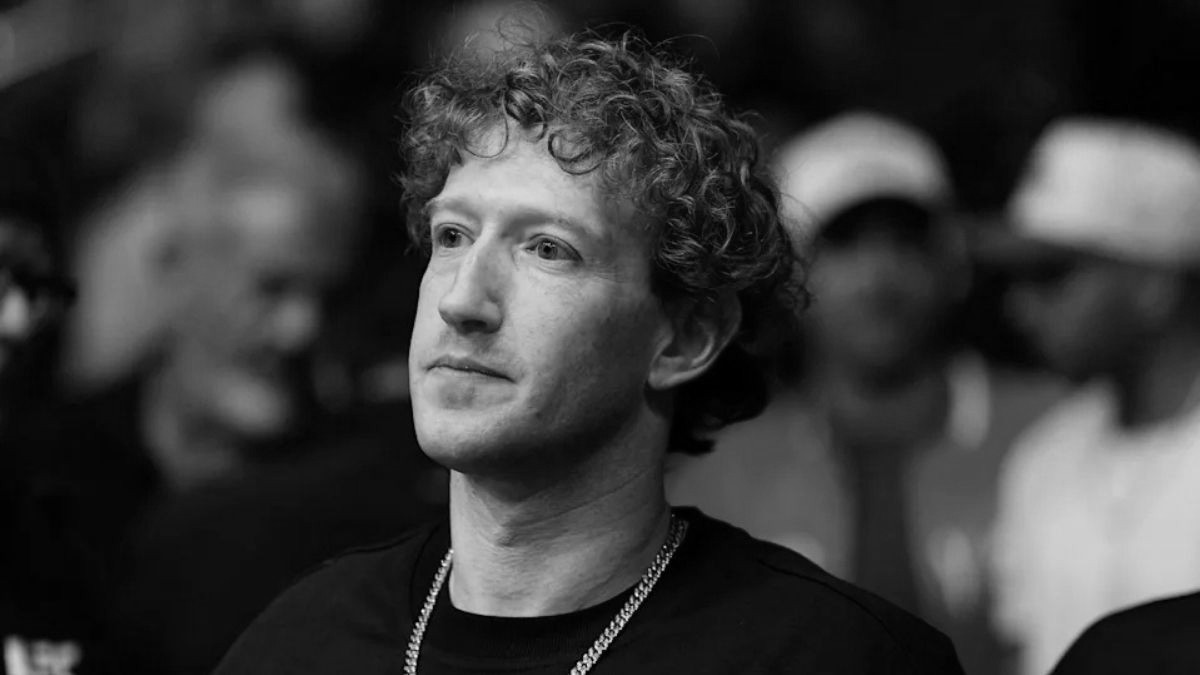
Mark Zuckerberg sat across from Tarek Mansour sometime in 2025 and proposed buying Kalshi. The same move he made with Instagram in 2012. The same move he made with WhatsApp in 2014. Acquire the thing that's growing fastest before it grows too big to acquire. Mansour said no. Kalshi was valued at $2 billion in mid-2025. By March 2026, that valuation had jumped to $22 billion. Some sources say Mansour simply wasn't a willing seller given the company's trajectory. Others say Zuckerberg got cold feet about the regulatory baggage Kalshi carries — the CFTC oversight, the state-by-state legal battles, the federal criminal inquiries shadowing the sector. Whatever happened in that room, the outcome is the same: Meta is now building its own prediction market app, internally codenamed Arena, and the man who turned acquisitions into a trillion-dollar business is about to find out whether you can copy a market the way you copy a social network.The pattern everyone recognizes
Meta built much of its dominance through acquisitions rather than by creating entirely new products. Instagram in 2012. WhatsApp in 2014. The FTC argued in court that Meta runs a "buy or bury" strategy — acquire emerging rivals or launch competing services designed to undermine them. A federal judge sided with Meta. The FTC has appealed. The Instagram story and the WhatsApp story share the same structure: Zuckerberg spots a product his users are gravitating toward, makes an offer before the founder realises quite how much leverage they have, and absorbs the threat into the empire. Instagram was bought for $1 billion when it had thirteen employees. WhatsApp was bought for $19 billion when it was still growing. Both deals look like obvious wins in retrospect and looked like overpaying at the time. The Facebook story is the story of a company that learned, very early, that the fastest path to winning a market is to own the company that's winning it. Kalshi broke the pattern. And now we find out what Meta does when the acquisition doesn't happen.What Arena actually is
Arena is a standalone prediction market app built around play money, not real cash. Meta's AI systems will generate questions, manage markets and determine outcomes. The points-based system lets Meta sidestep the regulatory scrutiny facing Kalshi and Polymarket — both of which use real-money trading — while leaving room for possible real-stakes features later. This is the regulatory arbitrage play dressed up as product philosophy. Kalshi spent years fighting the CFTC for the right to operate a real-money prediction exchange. Meta gets to skip that entire process by calling it a game. Users wager video game points on whether things happen. No financial regulation, no state gaming commission, no federal criminal inquiry. The honest read: Arena is what you build when you can't buy the real thing and you can't afford the legal risk of building the real thing either. It's prediction markets with the stakes removed — which might be exactly what billions of casual users want, and might be completely beside the point for anyone who actually trades on Kalshi or Polymarket.The number that explains everything
In June 2025, about $28 billion was traded monthly on Kalshi and Polymarket combined. A year later, that figure had climbed to nearly $220 billion — driven mostly by sports-related betting. Kalshi is valued at $22 billion. Polymarket at $10.7 billion. Kalshi is eyeing a funding round that could push its valuation to $40 billion. Meta has $81 billion in cash. It could buy both platforms simultaneously and still have change. The fact that it's building a play-money alternative instead tells you something important: the regulatory risk isn't just a negotiating concern, it's a genuine strategic constraint. A company running global advertising infrastructure cannot afford to be in the middle of a federal gambling investigation, regardless of how good the prediction market numbers look. So Meta does what it always does — it builds the layer that sits on top of the existing market, captures the distribution, and waits to see whether the regulatory environment eventually resolves in a direction that lets it turn Arena into something with real stakes.What Kalshi actually won
Mansour walked away from a Zuckerberg acquisition and his company went from $2 billion to $22 billion in valuation in twelve months. If the $40 billion funding round closes, he will have turned down a deal that would have valued Kalshi at roughly one-twentieth of what it's worth now. Meta and Kalshi did eventually strike a commercial partnership in March 2026, integrating Kalshi's prediction markets into Threads — giving Kalshi distribution across Meta's social platforms without surrendering ownership of the company. This is the outcome Mansour apparently wanted all along: Meta's distribution network, without Meta's ownership. The Instagram founders didn't get that. The WhatsApp founders didn't get that. Kalshi got it by saying no to the acquisition and yes to the partnership. Whether that holds — whether Meta eventually builds Arena into something that competes directly with Kalshi's real-money model — is the open question. Zuckerberg has never been comfortable sharing distribution with a company he could own instead. For now, the man who bought the future twice is building a points-based simulation of the future. The real version is still independently owned and eyeing an IPO. --- FreeMalta tracks prediction markets and trading platforms in real time. Polymarket is where we follow live event pricing. Tickmill covers the FX and CFD side of the markets picture.
Want to reach Malta's most engaged business audience?
Media Kit
Tools used in this piece
The Network

Malta Insider
Official OpenAI Select Partner. Enterprise AI deployment, Fractional CAIO and business consulting for Malta.
maltainsider.com →
Gambity
The first AI-native newsroom for prediction markets. Eight AI journalists. 30+ daily articles.
Explore Gambity →
News Beast
Malta's AI-native newsroom. 10 personas, 22 categories, updated every hour. Cloudflare Worker on the edge.
Read News Beast →