
AZN (NYSE / LSE) · Cambridge, United Kingdom
AstraZeneca
A Swedish and a British pharmaceutical company merged in 1999 with nothing to show for it. Then Pascal Soriot bet everything on oncology. $58.7 billion later.
Live Price
—
Today
—
Symbol
AZN (NYSE / LSE)
1913
Astra AB and Zeneca — two companies that needed each other
The company that became AstraZeneca has two separate origin stories. Sweden's Astra AB was founded in 1913 in Södertälje as a pharmaceutical company; it built a global reputation on drugs including the local anaesthetic Xylocaine (lidocaine), the ulcer treatment Losec (omeprazole), and the inhaled asthma therapy Pulmicort. The UK's Zeneca Group was formed in 1993 when Imperial Chemical Industries demerged its pharmaceutical and agrochemical divisions; Zeneca's origins went back to ICI's 1930s drug research. The two companies merged on April 6, 1999, in a $35 billion deal that created a British-Swedish pharmaceutical giant with a combined portfolio but significant patent expiration problems on the horizon.
2007
The patent cliff and the dark years
Through the early 2000s, AstraZeneca faced what analysts called a "patent cliff" — the simultaneous expiration of patents on its most valuable drugs. Losec (Nexium's predecessor) had already faced generic competition; Crestor (rosuvastatin, a cholesterol statin) was a key asset but faced Lipitor from Pfizer. The company spent heavily on R&D but struggled to replace revenue from expiring patents fast enough. Pfizer made an unsolicited $118 billion acquisition bid in 2014 — the largest ever proposed for a British company. AstraZeneca's board rejected it, arguing the company's prospects were greater than Pfizer's offer implied. That judgment would prove correct.
2013
Pascal Soriot, Cambridge headquarters, and the oncology bet
CEO Pascal Soriot, appointed in 2012, made a strategic decision that reshaped the company: he concentrated AstraZeneca's pipeline on oncology — cancer treatments — and moved the global headquarters from London to Cambridge, positioning the company within the world's leading pharmaceutical research cluster. The Cambridge Biomedical Campus, adjacent to Addenbrooke's Hospital, gave AstraZeneca proximity to the University of Cambridge, the MRC Laboratory of Molecular Biology, and dozens of biotech companies. The Discovery Centre — designed by Herzog & de Meuron and opened in 2021 — became AstraZeneca's physical commitment to scientific excellence.
2020
The Oxford COVID vaccine — and the China revenue surge
AstraZeneca partnered with the University of Oxford to develop a COVID-19 vaccine (ChAdOx1 nCoV-19) in 2020 — supplying it at cost during the pandemic. The vaccine was distributed to billions of people globally, particularly in lower-income countries, representing one of the largest public health contributions in pharmaceutical history. Beyond COVID, AstraZeneca's oncology portfolio — particularly Tagrisso for lung cancer, Imfinzi for various cancers, and Lynparza for ovarian cancer — was driving extraordinary revenue growth. China had become AstraZeneca's second-largest market, with a commercial organisation of thousands of people across dozens of Chinese cities.
2024
$54B revenue — oncology 40%+ — $80B target by 2030
AstraZeneca reported total revenue of $54 billion for 2024 — an 18% increase on the prior year — with oncology representing over 40% of revenue, cardiovascular/renal/metabolic over 20%, rare diseases 16%, and respiratory/immunology 15%. The TTM revenue as of April 2026 was $58.7 billion. The company held 16 blockbuster medicines and announced results of 16 positive Phase III studies in 2025. By 2030, AstraZeneca aimed to achieve $80 billion in total revenue and launch at least 20 new medicines — one of the most ambitious growth targets in pharmaceutical history from a company that had been written off less than fifteen years earlier.
Frequently Asked Questions
Who founded AstraZeneca?
AstraZeneca was founded by Merger of Astra AB (Sweden, 1913) and Zeneca Group (UK, 1993).
When was AstraZeneca founded?
AstraZeneca was founded in 1999.
Where was AstraZeneca founded?
AstraZeneca was headquartered in Cambridge, United Kingdom.
Why was AstraZeneca created?
The company that became AstraZeneca has two separate origin stories. Sweden's Astra AB was founded in 1913 in Södertälje as a pharmaceutical company; it built a global reputation on drugs including the local anaesthetic Xylocaine (lidocaine), the ulcer treatment Losec (omeprazole), and the inhaled asthma therapy Pulmicort. The UK's Zeneca Group was formed in 1993 when Imperial Chemical Industries demerged its pharmaceutical and agrochemical divisions; Zeneca's origins went back to ICI's 1930s drug research. The two companies merged on April 6, 1999, in a $35 billion deal that created a British-Swedish pharmaceutical giant with a combined portfolio but significant patent expiration problems on the horizon.
What does AstraZeneca do?
A Swedish and a British pharmaceutical company merged in 1999 with nothing to show for it. Then Pascal Soriot bet everything on oncology. $58.7 billion later. AstraZeneca merged in 1999. Was almost bought by Pfizer. Then bet everything on cancer drugs. $54B revenue in 2024, targeting $80B by 2030. The full story of the Cambridge oncology giant.
How did AstraZeneca grow?
AstraZeneca reported total revenue of $54 billion for 2024 — an 18% increase on the prior year — with oncology representing over 40% of revenue, cardiovascular/renal/metabolic over 20%, rare diseases 16%, and respiratory/immunology 15%. The TTM revenue as of April 2026 was $58.7 billion. The company held 16 blockbuster medicines and announced results of 16 positive Phase III studies in 2025. By 2030, AstraZeneca aimed to achieve $80 billion in total revenue and launch at least 20 new medicines — one of the most ambitious growth targets in pharmaceutical history from a company that had been written off less than fifteen years earlier.
Tools & Platforms
For Investors
The market doesn't care about your feelings.
But your broker's fees do.
But your broker's fees do.
Most people have a brokerage account. Fewer understand what it really costs them — in spreads, in fees, in missed instruments. Malta-regulated, direct market access, 600,000+ instruments.
Exante
Malta MFSA · 50 exchanges
Tickmill
Forex from 0.0 pips
Vantage
Multi-asset trading
Polymarket
Prediction markets
For Entrepreneurs
Opening a US company costs $300.
Most people think it's complicated. It isn't.
Most people think it's complicated. It isn't.
Most founders spend weeks on formation, banking and payments. The ones who move fast know which tools to use before they start. A US LLC, a real business account, and a way to pay people — in that order.
Mercury
Business finance · 300K+ founders
Doola
US LLC formation · YC backed
Melio
B2B payments
Xero 95% OFF
Accounting · 6 months
For C-Suite
Your competitor pays $200 less per month for EOR.
You're still on a spreadsheet.
You're still on a spreadsheet.
BVNK hired 20% of its workforce through Deel. The smartest operators aren't managing payroll complexity — they're outsourcing it. EOR in 150+ countries, multi-currency accounts, workforce payments at $200 less per month than competitors.
Deel
EOR · 150+ countries
Payoneer
$399/mo EOR · Save $200
Wise Business
40+ currencies · No hidden fees
Gusto
US payroll & benefits
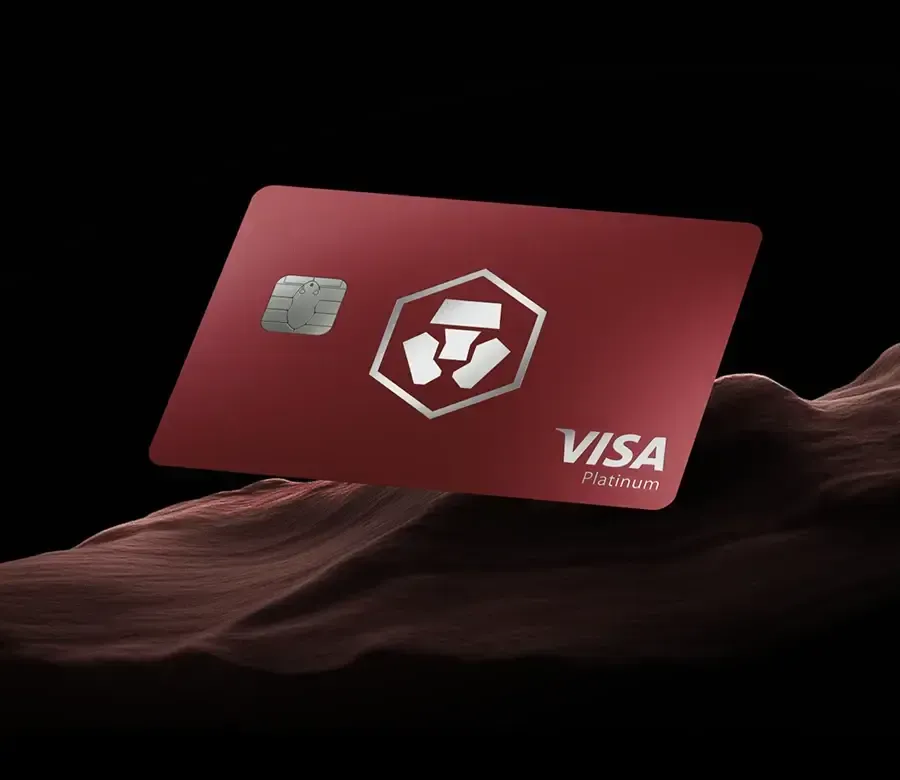
PLUS
2.0%
back in crypto · on every spend
€3.99 / month
or €39.90/year (€3.32/month)
Zero trading fees up to $20K/month
2.0% back in crypto on card spend
0% foreign exchange fees
EUR Cash Yield up to 1.35% p.a.
CRO Yield up to 2.00% p.a.
Virtual Visa card · Flexible cancel

PRO
3.0%
back in crypto · on every spend
€24.99 / month
or €249.90/year (€20.82/month)
Zero trading fees up to $50K/month
3.0% back in crypto on card spend
0% foreign exchange fees
EUR Cash Yield up to 1.70% p.a.
CRO Yield up to 2.50% p.a.
Airport lounge access (Priority Pass)

PRIVATE
4–6%
back in crypto · on every spend
CRO Lockup from €45,000
8.5% yield · 12-month staking · €450K tier at 9.5%
Zero trading fees · Unlimited volume
4.0%–6.0% back in crypto
0% foreign exchange fees
EUR Cash Yield up to 1.80% p.a.
Extra 1% p.a. on Earn allocations in CRO
VIP events · Exclusive experiences
8.5% CRO lockup rewards