
Private (family-controlled) · Osaka, Japan
Suntory Holdings
A Japanese wine merchant tried to make Scotch whisky in 1923. Was told it couldn't be done. Then made the world's best whisky. Bought Beam for $16 billion.
Live Price
—
Today
—
Symbol
Private (family-controlled)
1899
A wine and spirits merchant in Osaka
Shinjiro Torii founded a wine import and wholesale business in Osaka in 1899, naming it Kotobukiya. He was drawn to Western-style spirits at a time when Japan's Meiji-era modernisation was creating demand for European foods and beverages. Torii was meticulous about quality and had an unusually refined palate for a 20-year-old merchant — skills that would define the company's character for a century. He began importing wines and spirits from France and Scotland, building relationships with the distilleries whose techniques he would later adapt and transform.
1923
The Japanese whisky experiment — and the bet on Yamazaki
In 1923, Torii built Japan's first malt whisky distillery in Yamazaki, near Kyoto — a site chosen for its soft water, humid microclimate, and the confluence of three rivers that Japanese brewers and sake producers had long considered spiritually and practically superior. He hired Masataka Taketsuru — a young chemist who had studied distillation at the University of Glasgow and apprenticed at Campbeltown and Speyside distilleries — as his technical director. The conventional wisdom was that Japanese climate and ingredients made authentic Scotch-style whisky impossible. Torii and Taketsuru spent years proving otherwise, developing a distinct Japanese style: lighter, more delicate, with floral and fruity notes that the heavy Speyside style did not produce.
1963
Keiji Torii, the beer expansion, and Suntory reborn
Kotobukiya was renamed Suntory in 1963 — a combination of the Japanese word "sun" (太陽, taiyō) and Torii's name. The company expanded beyond whisky into beer, wine, soft drinks, and eventually food businesses. Suntory's Tory's whisky became a staple of Japan's rapidly expanding postwar consumer economy. The Hibiki 17, Yamazaki single malts, and Hakushu mountain distillery products — all developed and refined over decades — built a reputation for Japanese whisky that remained primarily domestic and largely unknown internationally until the 2000s.
2013
The world discovers Japanese whisky — and Suntory wins everything
Jim Murray's Whisky Bible 2015 named Yamazaki Single Malt Sherry Cask 2013 the "World's Best Whisky" — upending the Scotch whisky industry's assumption of its own dominance and triggering global demand for Japanese single malt that the distilleries could not immediately satisfy. Suntory had been making whisky for 90 years, maturing barrels in warehouses that no foreign buyer had paid attention to. Suddenly, every bar and whisky collector wanted Japanese whisky and Suntory's aged expressions were both the best available and dramatically under-priced relative to comparable Scotch.
2014
Beam Suntory — $16 billion, Jim Beam, and the American bourbon mission
In 2014, Suntory acquired Beam Inc. — the American spirits company whose portfolio included Jim Beam (the world's best-selling bourbon), Maker's Mark, Knob Creek, Basil Hayden's, and Teacher's Scotch — for $16 billion. The deal created Beam Suntory, combining Japanese whisky excellence with American bourbon heritage and a global distribution network. The acquisition was the largest overseas purchase by a Japanese company and gave Suntory the American market presence its own brands had never achieved. Beam Suntory was subsequently renamed Suntory Global Spirits in 2023, with revenues of approximately $2.9 billion. The full Suntory Group — including beverages, food, and health businesses — generated approximately $20 billion in annual revenue.
Frequently Asked Questions
Who founded Suntory Holdings?
Suntory Holdings was founded by Shinjiro Torii.
When was Suntory Holdings founded?
Suntory Holdings was founded in 1899.
Where was Suntory Holdings founded?
Suntory Holdings was headquartered in Osaka, Japan.
Why was Suntory Holdings created?
Shinjiro Torii founded a wine import and wholesale business in Osaka in 1899, naming it Kotobukiya. He was drawn to Western-style spirits at a time when Japan's Meiji-era modernisation was creating demand for European foods and beverages. Torii was meticulous about quality and had an unusually refined palate for a 20-year-old merchant — skills that would define the company's character for a century. He began importing wines and spirits from France and Scotland, building relationships with the distilleries whose techniques he would later adapt and transform.
What does Suntory Holdings do?
A Japanese wine merchant tried to make Scotch whisky in 1923. Was told it couldn't be done. Then made the world's best whisky. Bought Beam for $16 billion. Shinjiro Torii built Japan's first whisky distillery in 1923. Was told it was impossible. Made the world's best whisky. Then bought Jim Beam for $16 billion. The full story of Suntory.
How did Suntory Holdings grow?
In 2014, Suntory acquired Beam Inc. — the American spirits company whose portfolio included Jim Beam (the world's best-selling bourbon), Maker's Mark, Knob Creek, Basil Hayden's, and Teacher's Scotch — for $16 billion. The deal created Beam Suntory, combining Japanese whisky excellence with American bourbon heritage and a global distribution network. The acquisition was the largest overseas purchase by a Japanese company and gave Suntory the American market presence its own brands had never achieved. Beam Suntory was subsequently renamed Suntory Global Spirits in 2023, with revenues of approximately $2.9 billion. The full Suntory Group — including beverages, food, and health businesses — generated approximately $20 billion in annual revenue.
Tools & Platforms
For Investors
The market doesn't care about your feelings.
But your broker's fees do.
But your broker's fees do.
Most people have a brokerage account. Fewer understand what it really costs them — in spreads, in fees, in missed instruments. Malta-regulated, direct market access, 600,000+ instruments.
Exante
Malta MFSA · 50 exchanges
Tickmill
Forex from 0.0 pips
Vantage
Multi-asset trading
Polymarket
Prediction markets
For Entrepreneurs
Opening a US company costs $300.
Most people think it's complicated. It isn't.
Most people think it's complicated. It isn't.
Most founders spend weeks on formation, banking and payments. The ones who move fast know which tools to use before they start. A US LLC, a real business account, and a way to pay people — in that order.
Mercury
Business finance · 300K+ founders
Doola
US LLC formation · YC backed
Melio
B2B payments
Xero 95% OFF
Accounting · 6 months
For C-Suite
Your competitor pays $200 less per month for EOR.
You're still on a spreadsheet.
You're still on a spreadsheet.
BVNK hired 20% of its workforce through Deel. The smartest operators aren't managing payroll complexity — they're outsourcing it. EOR in 150+ countries, multi-currency accounts, workforce payments at $200 less per month than competitors.
Deel
EOR · 150+ countries
Payoneer
$399/mo EOR · Save $200
Wise Business
40+ currencies · No hidden fees
Gusto
US payroll & benefits

PLUS
2.0%
back in crypto · on every spend
€3.99 / month
or €39.90/year (€3.32/month)
Zero trading fees up to $20K/month
2.0% back in crypto on card spend
0% foreign exchange fees
EUR Cash Yield up to 1.35% p.a.
CRO Yield up to 2.00% p.a.
Virtual Visa card · Flexible cancel

PRO
3.0%
back in crypto · on every spend
€24.99 / month
or €249.90/year (€20.82/month)
Zero trading fees up to $50K/month
3.0% back in crypto on card spend
0% foreign exchange fees
EUR Cash Yield up to 1.70% p.a.
CRO Yield up to 2.50% p.a.
Airport lounge access (Priority Pass)
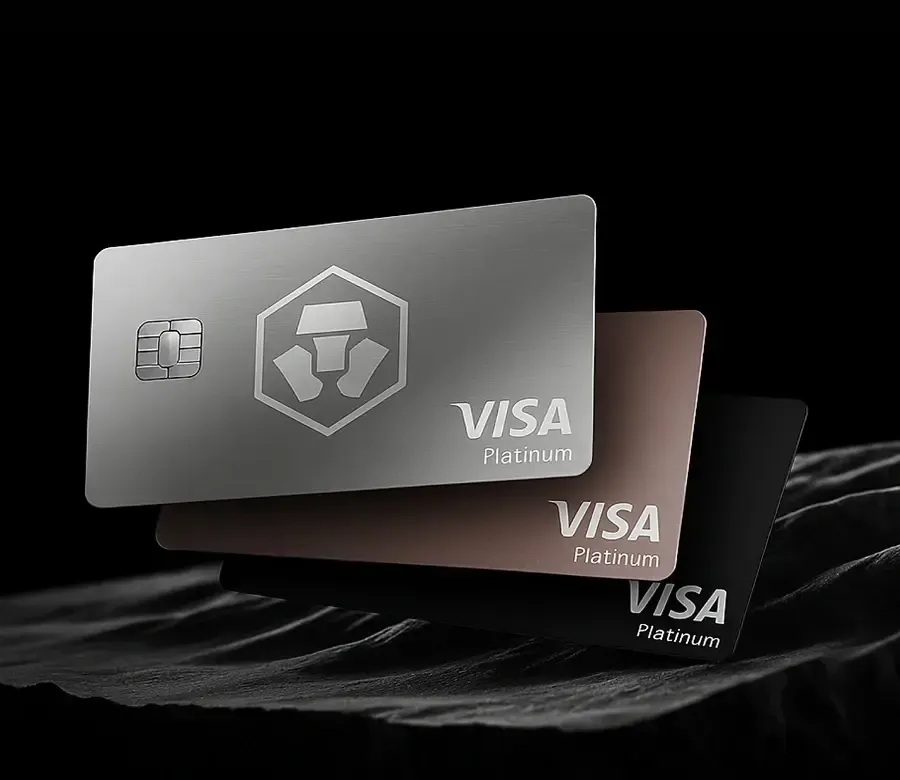
PRIVATE
4–6%
back in crypto · on every spend
CRO Lockup from €45,000
8.5% yield · 12-month staking · €450K tier at 9.5%
Zero trading fees · Unlimited volume
4.0%–6.0% back in crypto
0% foreign exchange fees
EUR Cash Yield up to 1.80% p.a.
Extra 1% p.a. on Earn allocations in CRO
VIP events · Exclusive experiences
8.5% CRO lockup rewards