Harvey Specter Would Last 3 Days in Malta's Justice System.

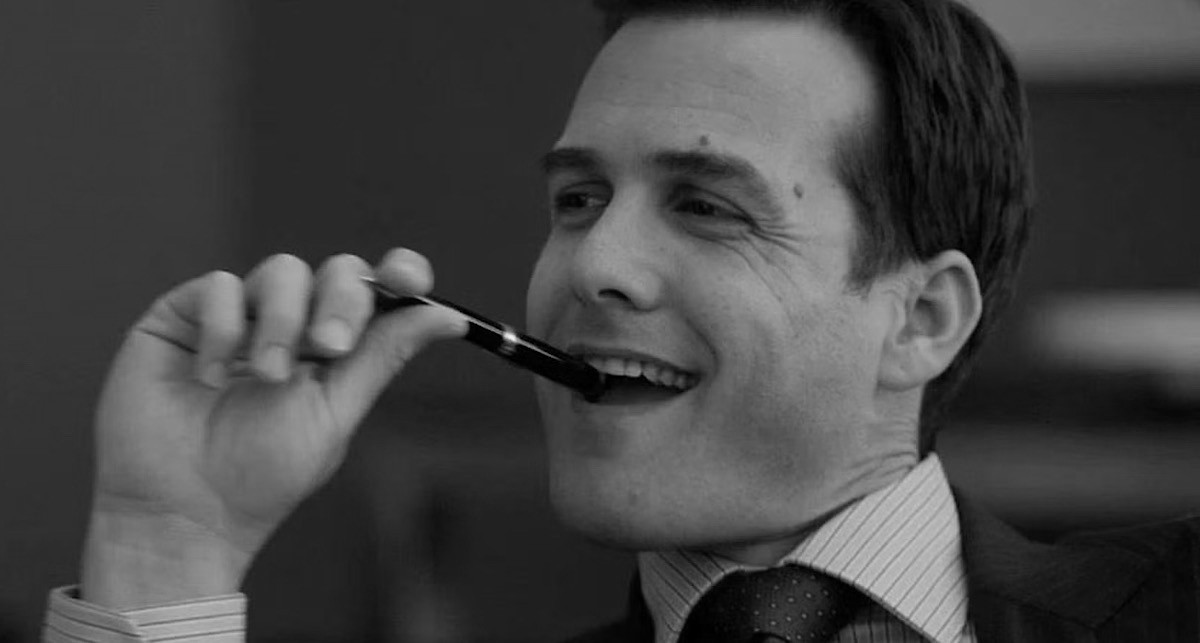
My ex-wife loved Suits.
She told me to watch it early in our relationship. I didn't. I was busy, or uninterested, or both — the reasons people give when they don't want to admit they've decided something isn't worth their time without actually checking.
I have now watched Suits six times.
I watched it during the years we spent in Malta's courts. Fifteen cases. More than a hundred and fifty hearings. A span of time and money and emotional energy that I am not going to try to quantify here because the number would be both accurate and meaningless. What I can tell you is that somewhere around the fortieth hearing, I started to understand why the show felt familiar. Not because Malta's justice system resembles Harvey Specter's Manhattan. Because it is so completely unlike it that the contrast clarified everything I was experiencing.
In Suits, a case resolves in forty-five minutes. Motions are filed, arguments are made, judges rule, outcomes are delivered. Harvey Specter walks into a courtroom having read everything, prepared for everything, anticipated every counter-argument. He delivers a line. The other side folds or doesn't fold. By the end of the episode, you know where you stand.
In Malta, a single case can run for three to four years and involve twenty hearings in which nothing materially changes.
This is not a failure of the lawyers. It is a structural problem that everyone inside the system knows about and nobody has found a way to fix. A judge in Malta's civil courts can be scheduled for thirty to forty hearings in a single day. Thirty to forty. Each case gets, at most, a few minutes of actual attention. Continuances are granted routinely, because there is no realistic alternative — the judge has twenty-nine other cases waiting and two of them are more urgent than yours. You come back in three months. Then six months. Then the other side requests another continuance. Then the judge retires and a new judge is assigned and you spend two hearings getting the new judge up to speed on a case that has been running for two years.
Harvey Specter would not survive this. He would file the motion, win the argument, deliver the line — and then wait six months for a judge who has read forty pages of a two-thousand-page file to schedule the next appearance.
There is a procedural tool in the American system called deposition. Before a trial, both sides can compel witnesses to give sworn testimony outside of court, on the record, with lawyers from both sides present. The questions are answered. The answers are documented. By the time you get to trial, both sides know what every witness is going to say. Surprises are rare. The process is faster because the preparation is more thorough.
Malta does not have deposition.
What Malta has instead is a process where witness testimony is given in court, one question at a time, one hearing at a time, with adjournments between sessions that can last months. A witness who would have been deposed in a day in New York can be in the process of giving testimony in Malta for a year.
I know this because I have lived it.
I also know, because I have watched more courtroom procedural television than any person without a law degree probably should, that deposition is not just a procedural efficiency. It changes the entire strategic landscape of litigation. When both sides know what the witnesses will say, cases settle more often. Not because lawyers become nicer, but because the uncertainty that makes it rational to keep fighting is removed. You cannot roll the dice on testimony you have already heard.
Without deposition, uncertainty persists longer. Uncertainty that persists longer means cases that run longer. Cases that run longer mean more hearings. More hearings mean more time for the judge who has thirty-nine other cases waiting today.
I have two lawyers. I did not set out to have two lawyers. It happened gradually, the way complexity tends to happen — one case required specialist knowledge, another required a different jurisdiction, the combination required coordination, and suddenly I was managing a legal operation with more moving parts than most small businesses.
Both of them have, at various points, looked at me with the particular expression lawyers reserve for clients who know too much of the wrong things, and said some version of: where did you learn that?
Suits, I tell them.
They do not find this as funny as I do.
Once, in a hearing, I said "nothing further" when my lawyer finished his examination. The judge laughed. Not the polite, professional laugh of someone who found something mildly amusing. An actual laugh — the kind that happens when something catches you off guard in a room where nothing is supposed to catch anyone off guard.
I had been in that courtroom enough times that I had stopped being a stranger in it. I knew the procedural rhythms. I knew when a continuance was coming before it was requested. I knew which arguments were going to land and which weren't. I had not planned to acquire this knowledge. I acquired it the way you acquire any knowledge that you absolutely did not want but that the circumstances of your life required.
Here is what I have learned, for whatever it is worth to you.
Malta's justice system is not broken. It is under-resourced in a very specific way — not enough judges for the volume of cases, and a procedural framework inherited from a different era that was designed for a smaller, slower society. The judges are not incompetent. The lawyers are not corrupt. The system is doing what it was designed to do, but the load it was designed to carry was not the load it is now carrying.
This is a problem that has a known solution. It requires political will and sustained investment and a willingness to restructure procedures that have been in place for decades. These are things that are easy to identify and difficult to deliver.
In the meantime, if you have a case in Malta's civil courts, I have the following advice.
Watch Suits. Not because it will teach you how Malta's system works. Because understanding how a well-functioning system is supposed to work will help you accept, without being destroyed by it, the pace at which Malta's system actually moves. The gap between Harvey Specter and reality is not a reason to despair. It is a calibration tool.
Also: learn the phrase "nothing further." The judges appreciate it more than you would expect.