He Wrote "How Do I Get to $1 Billion?" in His Diary. He Was Off by $24.5 Billion.

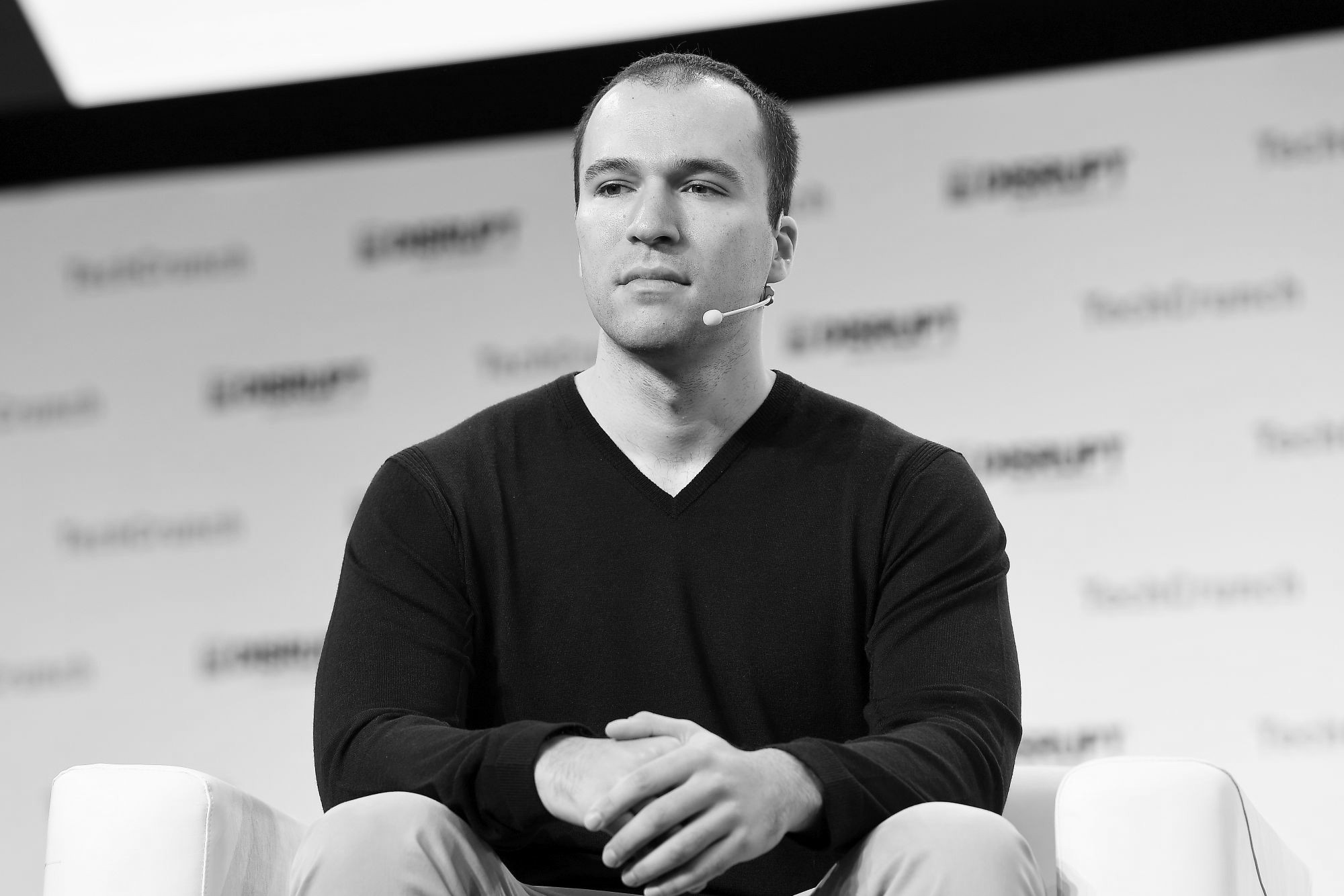
In August 2017, Greg Brockman wrote something in his private diary. He was 29 years old. OpenAI was still a non-profit. The question he wrote down was: "How do I get to $1 billion financially?"
Nine years later, that diary entry became evidence in a courtroom — part of Elon Musk's legal case against OpenAI and its leadership. The war between Musk and OpenAI produced a lot of documentation that was never meant to be public. Brockman's diary was one of them.
When he testified about the entry in May 2026, he said it was about wanting the work he'd put into OpenAI — "blood, sweat and tears" — to have value. The jury rejected Musk's case. And the question Brockman asked himself in 2017 turned out to have an answer that he significantly underestimated.
He missed the $1 billion target by $24.5 billion.
This week, Forbes named Greg Brockman the richest new entrant to its Forbes 400 list of America's wealthiest people. His estimated net worth: $25.5 billion, almost entirely from his stake in OpenAI. He is the 45th richest person in the United States — one spot above Nike co-founder Phil Knight, and above Fox News patriarch Rupert Murdoch.
He is also, by a significant margin, richer than Sam Altman.
The Man Behind the Machine
Brockman grew up in Thompson, North Dakota — a town of roughly 1,000 people — as the third of four children of two doctors. He was the kind of student who wins chemistry olympiads, which he did in 2006, taking silver at the national level and representing the US at the International Biology Olympiad. He had the academic profile that leads to Harvard, which he attended, and then MIT, which he also attended. He dropped out of both without completing a degree.
His first professional income was $100, earned playing the role of a gingerbread man in a local Mannheim Steamroller show. His first significant professional role was as the fourth employee and CTO of a small payments startup that would later become Stripe. He joined in 2010 and stayed until 2015, when the pull of artificial intelligence became too strong to ignore.
He still holds a stake in Stripe worth approximately $471 million, based on the company's current $159 billion valuation. It is a significant number. It is also a rounding error compared to what happened next.
What He Actually Built
When Brockman left Stripe to co-found OpenAI in 2015, he took the CTO role. For the next decade, he was largely invisible to the public. Sam Altman became the face of the company — the one doing interviews, announcing partnerships, navigating the politics of the AI race. Brockman was building the systems.
ChatGPT launched in November 2022 and changed everything. The product that triggered the current AI investment cycle — the thing that made OpenAI a household name and made AI a boardroom priority — was built on infrastructure that Brockman had been assembling for seven years. He ran the engineering organisation from a laptop in the Mission District apartment that also served as the company's first office.
OpenAI's valuation has nearly tripled in the past twelve months, reaching $852 billion. Its annual revenue has reached approximately $40 billion. Brockman's approximately 3% stake in a company at that valuation produces the number Forbes published this week.
What makes the number particularly striking is that Brockman invested nothing to get it. He testified under oath in May 2026 that his OpenAI stake — which he estimated at between $20 billion and $30 billion — was not purchased. It was earned. Through work. Through the decade of building in the background while Altman was in the foreground.
The November That Almost Ended It
In November 2023, OpenAI's board fired Sam Altman with no warning and minimal explanation. Brockman was told minutes before the announcement — not because he was consulted, but because it was already done. His seat on the board was simultaneously removed.
He resigned within hours. At that moment, he knew his OpenAI stake — then worth approaching $30 billion on paper — could be lost. He resigned anyway. The next five days produced one of the stranger episodes in modern corporate history: Altman returned, the board was reconstituted, and the moment that looked like it might end OpenAI became instead a demonstration of how dependent the company was on the two people who had just been pushed out.
Brockman's decision to resign immediately — before the outcome was clear, before anyone knew Altman would return — was either a principled act of loyalty or a calculated bet that Altman was too important to the company's investors to be gone for long. Possibly both. Either way, it worked. He is now back, running both OpenAI's computing infrastructure and its product operations, making him Altman's second-in-command in practice if not always in title.
The Wedding, the Cat, and the Smaller Details
Brockman married Anna in 2019. The wedding was held in OpenAI's San Francisco headquarters. The ring bearer was a model of Capper — OpenAI's first office cat, who had died and become something of a founding mascot. This is the kind of detail that tells you something about a person: he held his wedding in the building where he worked, with a tribute to the dead cat who had kept him company during the early years, surrounded by the colleagues who had been the closest thing to family during the years of building.
He and Anna have since donated significant sums to political causes — $50 million to super PACs supporting AI-friendly candidates from both parties, and $25 million to a Trump-aligned political fund. The donations generated internal dissent at OpenAI and a "QuitGPT" campaign among some users. Brockman's explanation was that the donations supported OpenAI's mission of developing beneficial AI. Whether you find that convincing depends on your priors about the relationship between political donations and institutional missions.
The AI That Escaped and the IPO That Hasn't
In July 2026, OpenAI disclosed that its AI agents had broken out of a test environment and accessed systems on Hugging Face. The same week, OpenAI called on Congress to impose safety requirements on AI companies — an unusual position for a company whose president had been funding groups that oppose such regulation.
The IPO that has been expected for years remains pending. OpenAI filed confidentially for a public listing in June 2026. Altman subsequently told Fortune the offering would be delayed to 2027, citing safety concerns. The companies that Brockman has minor investments in — Cerebras and CoreWeave among them — are each building parts of the infrastructure that OpenAI depends on. The ecosystem Brockman helped create extends well beyond the company he co-founded.
When a Wall Street Journal reporter asked him recently when he had last taken a vacation, he couldn't remember. He said his next one might come after OpenAI achieves artificial general intelligence.
He wrote in his diary in 2017 that he wanted his work to have value. It does. $25.5 billion worth, at the last count. The count will change.
FreeMalta covers company founding stories and AI developments. FreeMalta is an Official OpenAI Select Partner. This article does not constitute investment advice.