Neal Mohan Built YouTube's Billions. Nobody Knew His Name.

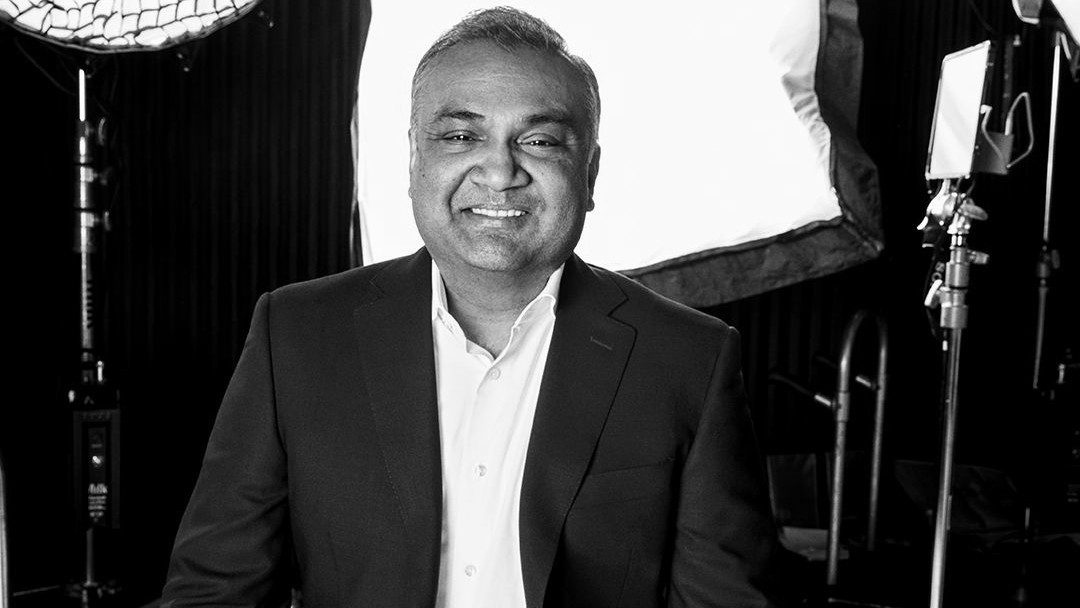
There is a scene in The Godfather — not the famous one, not the horse, not the baptism — where Tom Hagen sits quietly at the table while the Corleones make their decisions. He is the consigliere. He does not shout. He does not threaten. He reads the room, he understands the consequences, and when Michael or Vito turns to him, he says exactly what needs to be said. No more.
Tom Hagen is not the protagonist. He is not supposed to be. But without him, the whole thing falls apart.
I think about Tom Hagen when I think about Neal Mohan.
The man Google paid $100 million to keep
In 2008, Twitter wanted to hire Neal Mohan. He was working at Google, running display advertising, building the systems that would eventually underpin most of what we now understand as the internet's economic model. He was good at it — not famous-good, not TED-talk-good, but structurally, fundamentally, irreplaceably good. The kind of good that organisations don't notice until it's gone.
Google noticed before it was gone. They offered him a retention package reported at $100 million. One hundred million dollars to stay. Not to take a new role. Not to run a new division. To stay doing what he was already doing, because the people above him had calculated what losing him would cost and decided the number was too large to risk.
He stayed.
He stayed for fifteen years. Fifteen years during which YouTube went from a video-sharing website that Google had bought for $1.65 billion — a number that was considered insane at the time — to something generating $35 billion a year in advertising revenue alone. Fifteen years during which the internet changed completely, three or four times over, and YouTube somehow remained relevant through every change.
That relevance was not an accident. And it was not primarily Susan Wojcicki's doing, though she ran the place and deserves her credit. It was, in significant part, Neal Mohan.
What he actually built
This requires specifics, because the abstract version — "he built YouTube's product strategy" — means nothing unless you understand what that actually means.
YouTube Premium. The subscription layer that allows YouTube to exist in a world where ad blockers are widespread and attention is fragmenting. Neal Mohan built it. Not the idea of it — the infrastructure, the deals, the product architecture that made a subscription model work for a platform that had been free since 2005.
YouTube Shorts. The feature that allowed YouTube to compete with TikTok when TikTok arrived and everyone assumed YouTube was finished in the short-form video space. Two billion logged-in users per month now watch Shorts. Neal Mohan built it.
The Creator Economy — the system by which the people who make content on YouTube can actually make a living from it. The monetisation tools, the revenue sharing, the infrastructure that turned "making YouTube videos" from a hobby into a career for millions of people around the world. Neal Mohan built it.
He did not announce any of this. He did not give interviews about it. He built it and it worked and the person at the front of the stage — first Eric Schmidt, then Larry Page, then Susan Wojcicki — stood there while Neal Mohan made sure the stage didn't collapse.
On being the person behind the person
There is a song by The National called Bloodbuzz Ohio. The line I keep coming back to is this: "I was carried to Ohio in a swarm of bees." It makes no literal sense. But it captures something about the way certain kinds of movement happen — not chosen, not planned, just carried. Arrived somewhere by forces you didn't entirely control, doing something you didn't entirely intend, finding that it fits anyway.
Neal Mohan is from India. He came to the United States. He went to Stanford. He ended up at a startup called DoubleClick, which built the advertising infrastructure that the entire internet would eventually run on. Google bought DoubleClick in 2008 for $3.1 billion. Neal Mohan came with it.
This is how the best careers often work. Not a straight line from ambition to outcome. A swarm of bees. A series of adjacencies. You build something, it gets acquired, you stay because you're good and they pay you to stay, and fifteen years later you're running YouTube.
Susan Wojcicki announced her departure in February 2023. She had run YouTube for nine years. She had overseen its transformation into one of the most profitable divisions of one of the most valuable companies in history. And when she left, the board did not go looking for a marquee name. They did not hire a McKinsey-approved leader with a famous track record and a book deal in progress. They promoted the man who had been in the room for fifteen years, quietly making sure everything worked.
Neal Mohan became CEO of YouTube in February 2023. He was 49 years old. He gave a brief statement. He did not make promises he couldn't keep. He went back to work.
The thing nobody talks about
In Kazuo Ishiguro's The Remains of the Day, the butler Stevens spends his entire life in service to a great house. He is brilliant at his work. He suppresses everything — his opinions, his feelings, his own desires — in service of the household. The tragedy of the novel is that he does this so completely, for so long, that by the time he considers whether it was worth it, he can no longer remember what he wanted in the first place.
I am not saying Neal Mohan is Stevens. That would be unfair and probably wrong. But I think about that novel when I think about the particular kind of career he has had — the career of the person who holds the infrastructure together while other people make the speeches.
There is a cost to that. There is also, I think, a kind of freedom in it. When you are not the face, you are not subject to the particular tyranny of the face — the constant performance, the public scrutiny, the way that every statement you make becomes a news story. Neal Mohan spent fifteen years building things without having to simultaneously manage a personal brand. That is a rare gift in the current economy, even if it wasn't always recognised as one.
Now he is the face. Now he gives the interviews, makes the announcements, sits at the front of the stage. He is doing it with the same quiet competence he brought to everything else. There is no drama. There are no provocative posts. There is no ego visible from the outside.
There is just YouTube, working. Which is, when you think about it, the whole point.
This is yours too
Malta's content creators — and there are more of them than you'd think on an island of 588,000 people — run on YouTube. The iGaming affiliates, the travel channels, the Maltese-diaspora accounts that post about life on the island for people who grew up here and left. They are all using infrastructure that Neal Mohan built.
News Beast, if it ever becomes a video operation, will use that infrastructure. The FreeMalta YouTube channel, when it exists, will use that infrastructure. The creator economy that Neal Mohan built for fifteen years in the background, without anyone outside the industry knowing his name, is the one that will carry whatever we build next.
He won't know. He doesn't need to.
That's the point.
--- FreeMalta covers the people and companies shaping the digital economy — including the ones nobody talks about. More profiles in Off The Record. Google's company profile, and the broader ecosystem Neal Mohan helped build, is in The Garage.