
Why Is Nvidia Worth So Much? It’s Not Just About Chips.
Everyone Wants to Build AI. Someone Has to Supply the Machinery. Everyone has an AI idea now. An assistant. An agent. A platform that will apparently transform your business before...

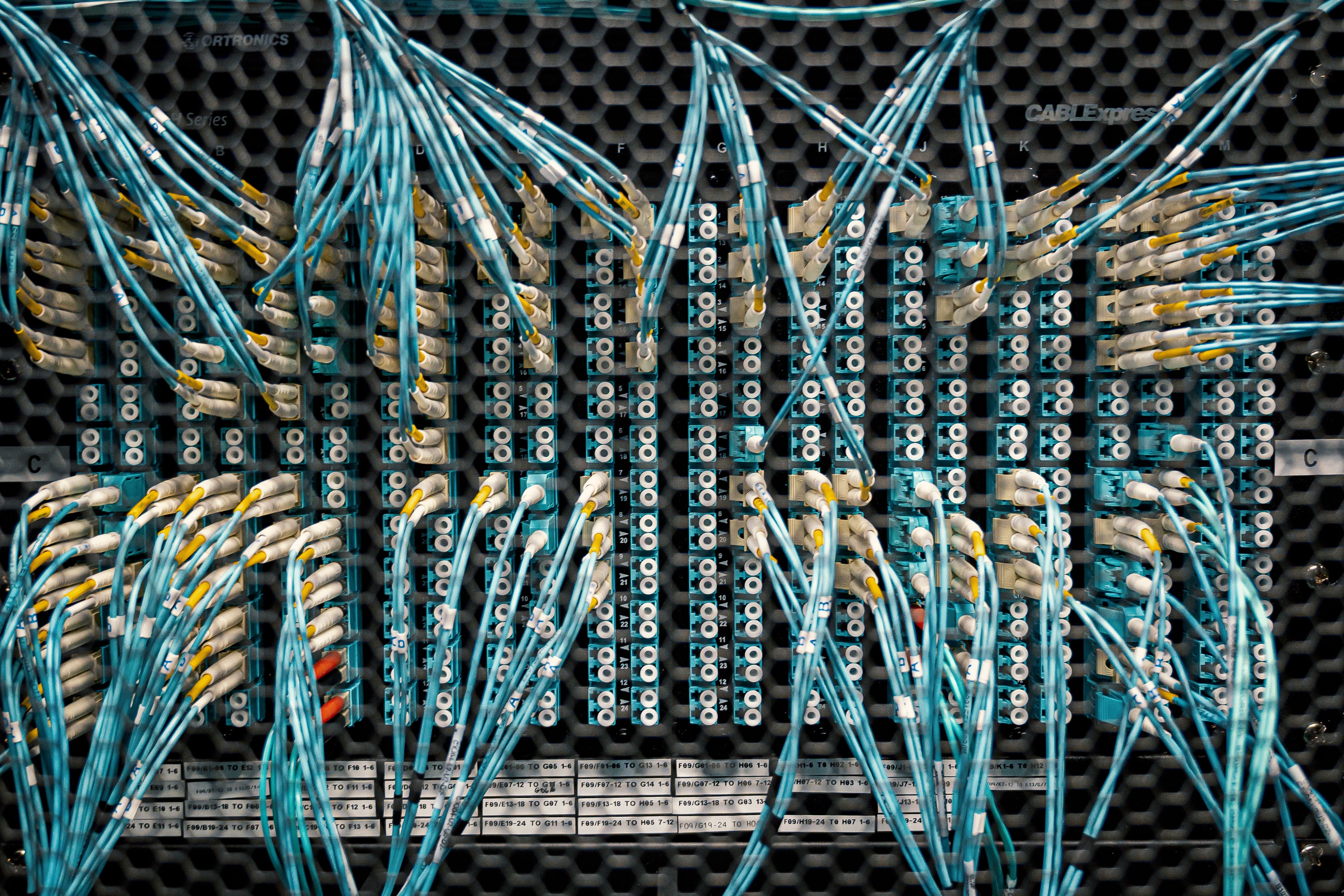
Everyone Wants to Build AI. Someone Has to Supply the Machinery.
Everyone has an AI idea now.
An assistant. An agent. A platform that will apparently transform your business before Thursday.
Some of these ideas are genuinely useful. Some would benefit from becoming a slightly better spreadsheet.
But behind the products people actually use, something has to do the computing.
That is a good place to start when asking why Nvidia is worth so much.
The app gets the attention. The machinery gets the order.
The money is already arriving
It is tempting to explain Nvidia entirely through excitement about the future.
There is plenty of that. There is also a rather substantial present.
For its second quarter of fiscal 2027, ended 26 July 2026, Nvidia reported $96.2 billion in revenue, including $89 billion from its Data Center business. Total revenue was up 106% from the previous year. Those figures come from Nvidia’s financial results.
These are quarterly numbers.
That detail deserves a moment.
The company also reported a 75% GAAP gross margin. Gross margin is not the final profit margin—it comes before expenses such as research and development—but it helps explain why this business attracts so much attention.
Nvidia is not merely being paid in enthusiastic predictions.
Customers are spending real money.
Why can’t someone just make another chip?
They can. Competing hardware exists, and customers have reasons to consider alternatives.
But the chip is only part of the decision.
Nvidia’s CUDA platform supplies the software layer developers use to work with its GPUs. Its toolkit includes libraries, a compiler, debugging tools and other components needed to build accelerated applications. Nvidia’s developer documentation explains the platform.
You do not need to understand the engineering to understand the business implication.
Imagine your team already knows a set of tools. Your applications work with them. Your deployment process has been built around them.
A different piece of hardware has to justify more than its purchase price. You need to consider the work involved in using it, maintaining it and getting the performance you expect.
My reading is that this combination—hardware, software and an established way of working—helps explain Nvidia’s position.
A cheaper component is attractive. A costly change of system might be less attractive.
About that enormous trillion-dollar figure
When I started looking into this, one number needed untangling.
In Nvidia’s May 2026 earnings call, Jensen Huang described industrial and enterprise activity as representing roughly $50–80 trillion of the world’s economy, while discussing the longer-term opportunity for AI. The wording appears in the earnings-call transcript.
That is not Nvidia’s revenue.
It is not Nvidia’s market value.
And it is not a forecast that companies will spend that amount buying its equipment.
It is a description of the wider economic activity AI could affect.
“AI might change this much of the economy” and “Nvidia will earn this much money” are very different sentences.
Once a number becomes enormous enough, the internet sometimes stops asking what it measures.
I would rather keep asking.
A remarkable company can still carry remarkable expectations
A share price includes expectations about what comes next.
That makes the valuation question harder than the product question.
You might admire Nvidia’s technology, recognise its commercial position and still wonder how much future success is already reflected in its price.
What happens if customers become more selective about spending? If alternative systems become more attractive? If useful AI products take longer to produce the returns their builders expect?
These are questions worth considering, not predictions of an imminent collapse.
I find the conversation more useful when it leaves room for both impressive results and uncertainty.
Admiring a business does not oblige you to believe every expectation attached to it.
From a small website, the infrastructure looks different
Working on FreeMalta, I usually encounter AI through the part I can use: a conversation, a draft, a piece of code or an automated workflow.
It is easy to forget how much sits behind that interaction.
Our AI Journey explores the longer history behind today’s tools. The current excitement makes more sense when you see it as part of years of research and engineering, rather than something that appeared fully formed in a chat window.
And if you want the company’s own path through that story, our Nvidia company profile is here.
For me, the explanation comes back to a fairly ordinary business question.
When a great many people want to build something, who are they paying to make the building possible?
Nvidia has a powerful answer today.
The argument about its valuation is how much bigger that answer becomes—and how much of it the share price already assumes.
Ilhan Irem Yuce
Founder of FreeMalta and MaltaInsider. Living and building in Malta for 12 years. These pieces come from asking questions, making things and paying attention to what the polished version leaves out.
Explore the work
Ghostwriting Is Dead. Storytelling Is What Replaced It.
Let me tell you something about LinkedIn ghostwriting that most people in the industry won't admit. The version of it that existed three years ago — "send me three bullet points about...

Zuckerberg Tried to Buy the Future. It Said No.
Meta offered to buy Kalshi. Kalshi said no. Now Meta is building Arena — and the man who bought Instagram for $1 billion is about to find out whether you can copy a market the way you copy a social ne

MiCA's Winners and Losers: OKX Got Malta's Licence, Binance Got Nothing
244 exchanges secured MiCA approval. Binance, the world's largest, wasn't one of them. Here's the full scoreboard — and why Malta ended up on the winning side of this particular regulatory arms race.
Something worth
saying belongs here.
Bring the experience, the decision and the evidence. Paid stories are labelled; the reader should never have to guess.
Discuss a partner story